
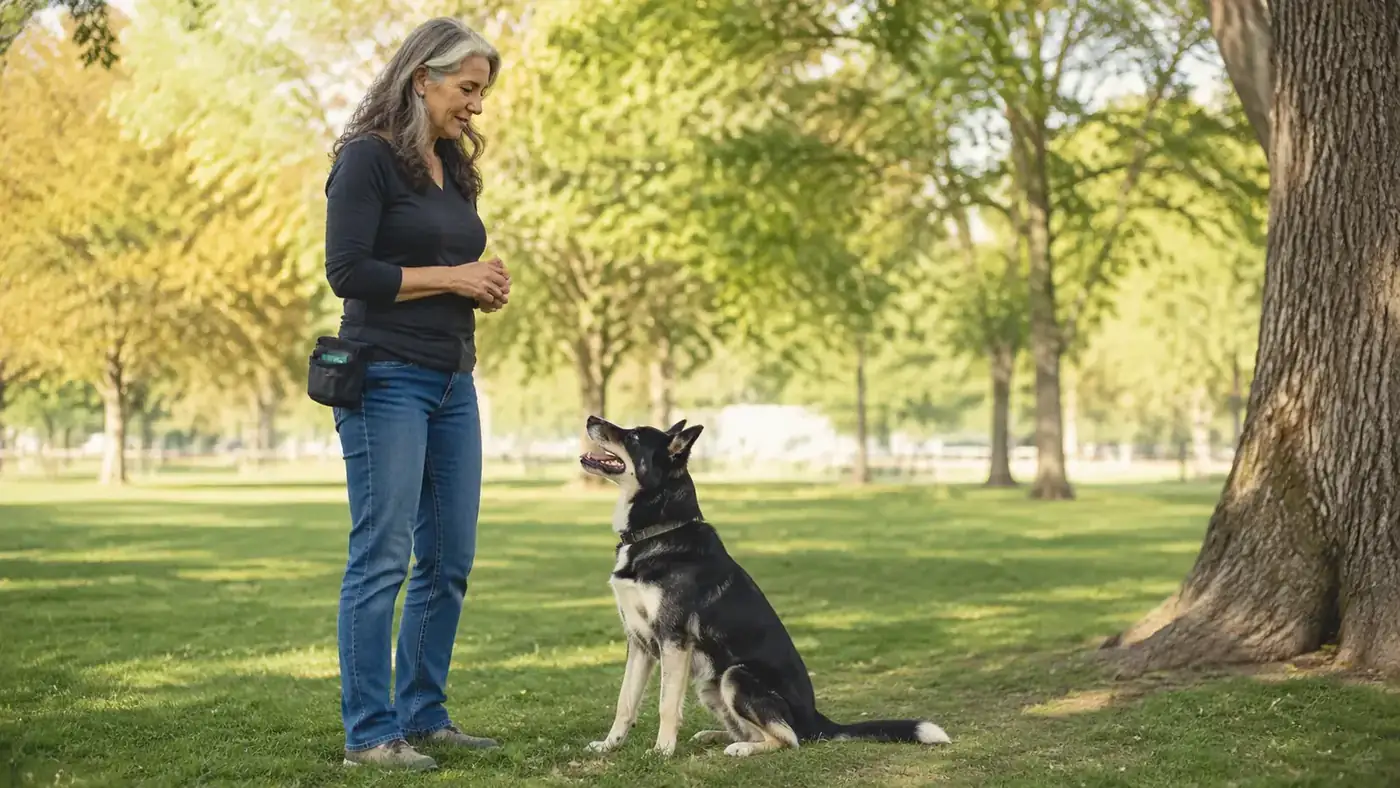
Here is the thing about a product with a 4.8-star rating and over 2,000 reviews: the glowing feedback is almost certainly real, and the problems are almost certainly real too. They just rarely appear in the same review. I bought the Gobeigo Dog Treat Pouch after watching my training sessions stall out because I kept fumbling treats from a zip-lock bag in my jacket pocket. After several weeks of daily use with my rescue mix Biscuit, a 38-pound lab cross with a short attention span and strong opinions about kibble, I have a clearer picture than any single reviewer captures.
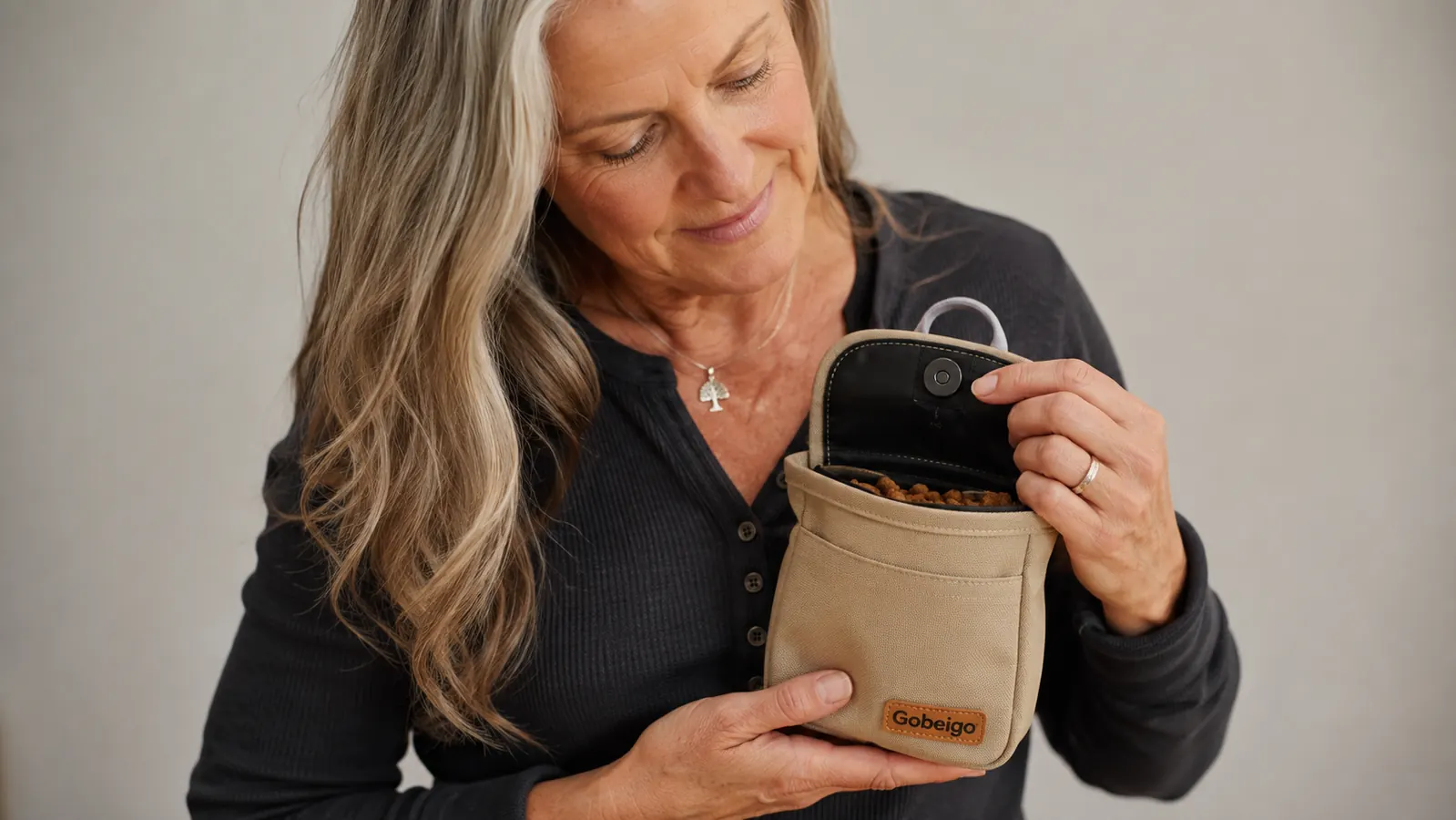
The Gobeigo (ASIN: B0D9GFLLYP) is a two-cup capacity treat bag with a dual magnetic closure flap, a drawstring option, a removable waist clip, a built-in clicker, and a zippered pocket. It retails for under $16, which puts it solidly in the budget tier. What I want to do here is tell you exactly what surprised me, good and bad, and give you a realistic picture of who will love this pouch and who will need to spend more.
The Quick Verdict
A genuinely smart design at a fair price, but the belt clip loosens over time, the nylon traps odor after a few weeks, and the clicker takes some getting used to. Recommended with clear eyes.
Amazon Check Today's Price →If your training sessions are stalling because reward delivery is too slow, this pouch closes that gap.
The Gobeigo treat pouch is under $16 and includes a clicker. For most new trainers and casual-use owners, that combo is exactly what they need. Check current availability on Amazon.
Amazon Check Today's Price on Amazon →The Magnetic Closure: Better Than It Sounds, Not Perfect
Most treat pouches use a drawstring, a velcro flap, or just leave the bag open at the top. The Gobeigo uses two embedded magnets in the flap, which snap shut automatically when you release it. In practice, this is genuinely useful. During recall drills, I need my hand free in under half a second after rewarding Biscuit. With my old drawstring pouch, that meant either leaving it hanging open (treats flew everywhere) or fumbling with the string and losing the training window entirely.
The magnets are strong enough to stay closed during a brisk walk but not so strong that one-handed opening becomes a struggle. That balance took obvious design thought. The issue, which the five-star reviews mostly skip, is that the magnet sewn into the fabric flap starts to show through the material around week four or five of daily use. The nylon around the magnet puckers slightly. The closure still works, but the finish looks worn in a way that would not suggest a durable product to someone who had not already bought one. If you are buying this as a gift or for a client, that visual wear matters.
The pouch also ships with a drawstring as a backup closure. I rarely use it, but it is there for people who want to keep the pouch fully sealed during transit or when the bag is in a training bag between sessions. Smart inclusion.
The Clicker: Functional but Not a FitPAWS or Karen Pryor
The included clicker is one of the main selling points in the listing, and reviewers consistently mention it as a bonus. It slides into a loop on the side of the pouch and detaches easily with one hand. The click tone is medium-pitched and consistent, which is what matters for marker training. Biscuit conditioned to it within two sessions, which tells me the sound profile is appropriate.
What the reviews do not tell you: the clicker is built to budget price-point tolerances. After about six weeks of daily use, the spring inside mine developed a slight double-click about 30 percent of the time. That is a real training problem, because inconsistency in the marker signal confuses the dog about exactly which behavior earned the reward. I started using a standalone i-Click clicker for precision training and kept the Gobeigo clicker for basic reinforcement sessions where exactness is less critical.
If you are a casual trainer doing sit, stay, and loose-leash work with a family dog, the bundled clicker will likely never cause you a problem. If you are working on complex behavior chains, competition obedience, or reactivity protocol, budget $8 for a dedicated clicker and treat the Gobeigo version as a backup.
The clicker conditioned Biscuit in two sessions. It is a real training tool, not a toy. It just is not a precision instrument.
Fit and Wear: The Details the Photos Do Not Show
The waist clip is a steel carabiner style, and it clips onto a belt or waistband easily. Here is the fit issue: the carabiner is designed for a standard 1.5-inch belt. If you wear athletic leggings without a waistband, or a thin elastic band, the pouch rotates forward during movement. I solved this by clipping it through a belt loop instead of over the waistband, which stabilized it on runs and recall drills.
The clip itself is my bigger concern. After about eight weeks of daily use, the tension on the carabiner spring loosened noticeably. It still clips, but it does not lock with the same confidence it had new. I have not had it come off during a session, but I now clip it through two belt loops instead of one as a precaution. This is the kind of wear that never makes it into a review written at the two-week mark.
The body of the pouch is a mid-weight nylon ripstop, which cleans up easily with a damp cloth. It is not waterproof in any meaningful sense, but it resists light mist. I trained in a light rain twice without issues. The interior lining is a slicker nylon that wipes clean, though it does require actual wiping rather than just air drying after a session with soft, moist treats.
Odor: The Honest Version
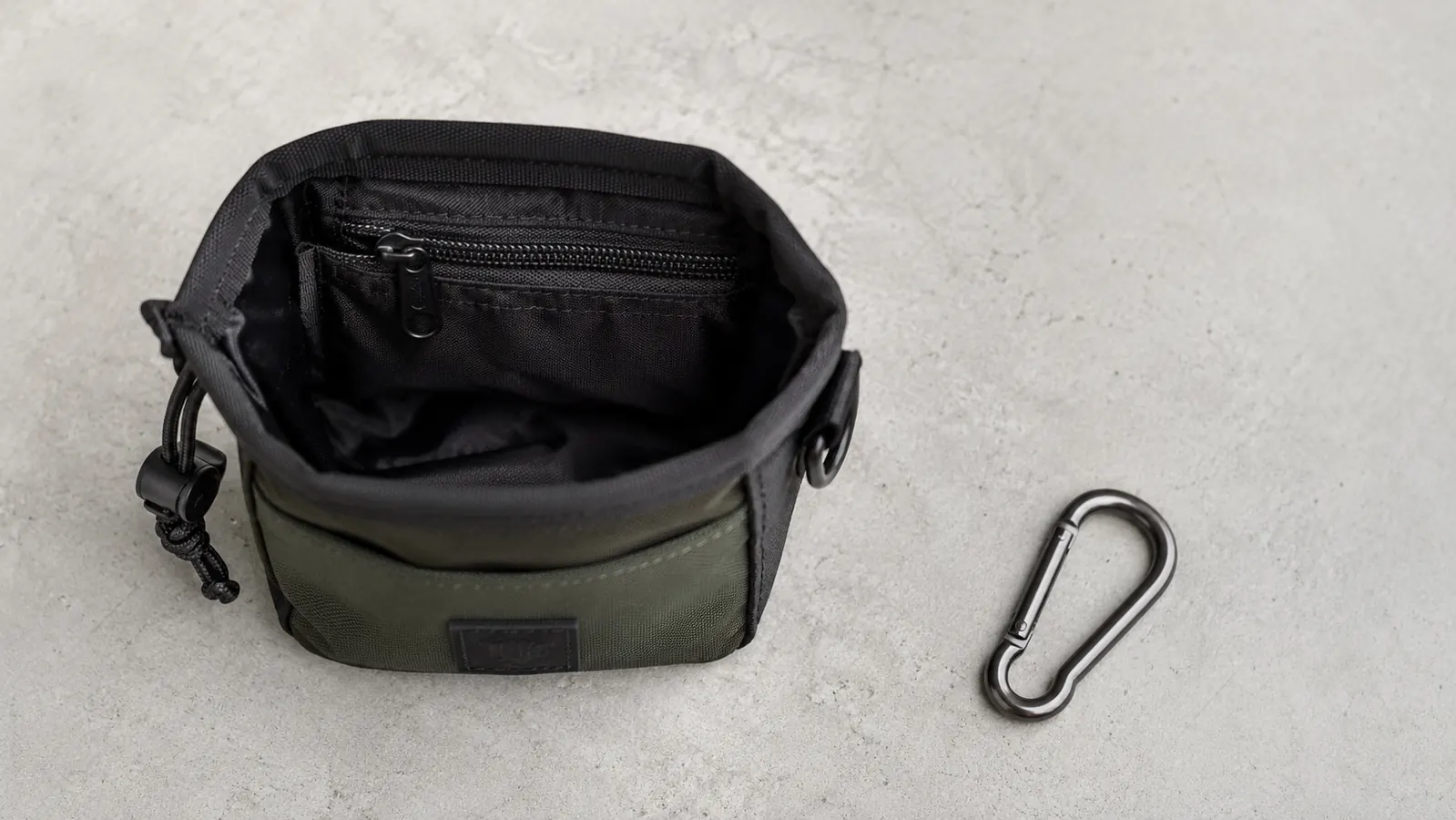
No review I read before buying mentioned odor, so I will mention it here. After three to four weeks of daily use with high-value soft treats, the interior of the pouch holds a faint but persistent meaty smell. It does not transfer to clothing in my experience, but if you are sensitive to food odors, you will notice it when you open the pouch.
Washing the pouch is listed as hand-wash only in the product description. I have done this four times. Warm water and a small amount of dish soap, rinse thoroughly, hang to dry. The smell reduces but does not fully disappear after washing. If you are using dry kibble or low-moisture biscuits exclusively, this is probably not an issue you will ever encounter. If you train with freeze-dried raw, liver treats, or anything soft and aromatic, plan to wash this pouch roughly every two weeks.
One practical workaround: I store mine with a small open bag of baking soda between sessions. It is a modest fix, but it noticeably slows the odor buildup between washes.
Capacity and the Two-Cup Claim
The listing says two-cup capacity. That is accurate for dry kibble. I have filled it with Biscuit's regular dry food for informal recall training on long-park sessions without running out. For soft treats cut to pea-size, the capacity is generous enough for a 45-minute training session with a moderately treat-motivated dog.
The zippered external pocket is small, roughly large enough for a folded piece of paper, a poop bag, or a few high-value jackpot treats you want to keep separate. I use it for a couple of homemade jerky strips reserved for the most challenging behaviors. It is a thoughtful addition and it does not add meaningful bulk to the pouch's overall profile.
The pouch does not have a separate compartment or liner. Everything goes into one chamber. If you want to run two treat varieties in the same session, you will need a second pouch or a small silicone travel container that fits inside. Some trainers prefer the simplicity of a single chamber. Others find it limiting. Know which camp you are in before buying.
What the Glowing Reviews Are Actually Right About
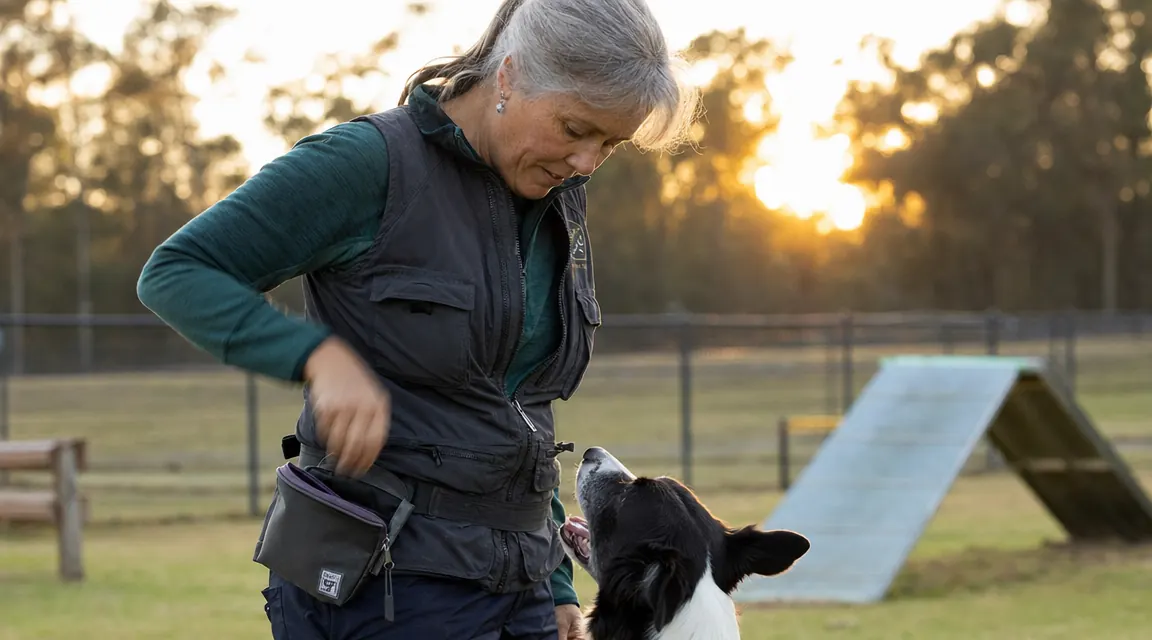
I have spent several paragraphs on the caveats. Here is where the five-star reviewers are not wrong. The magnetic closure is a genuine quality-of-life upgrade over drawstring bags, especially for high-repetition training like loose-leash work where you are rewarding every 15 to 20 seconds. The speed improvement in treat delivery is real and measurable in terms of your dog's reinforcement timing.
The price is genuinely fair for what you get. At under $16 with a clicker included, this is a better starting point than a $5 pouch without a clicker or a $45 premium pouch that requires more commitment than a beginner trainer needs. The build quality is appropriate for the price tier, which is different from saying the build quality is poor.
The clicker attachment loop keeps the clicker accessible without rattling around loose in a bag. The overall ergonomics of the pouch, its size, weight, and balance on the hip, are comfortable for an hour-long session. I do not find myself thinking about the pouch during training, which is the right outcome. You want a tool that disappears so you can focus on your dog.
What I Liked
- Dual magnetic closure closes automatically, keeping treats in during fast movement
- Included clicker saves money and stays attached via side loop
- Two-cup capacity handles most training sessions without refilling
- Zipper pocket useful for high-value jackpot treats
- Wipes clean easily after most sessions
- Price is genuinely fair given the feature set
Where It Falls Short
- Carabiner clip loosens with daily use over six to eight weeks
- Nylon traps odor from soft treats after three to four weeks
- Clicker spring can develop a double-click after extended heavy use
- Magnet area shows visible puckering in the fabric around week four
- Fit is unstable on thin elastic waistbands without a standard belt
- Single chamber limits treat variety management mid-session
Who This Is For
The Gobeigo treat pouch is the right choice if you are starting a training practice with a new dog or puppy and want a complete kit at a low entry cost. It is also a solid fit if you train casually, meaning a few sessions per week focused on basic manners, recall, and loose-leash walking. The magnetic closure delivers a real training benefit at this price, and the included clicker is perfectly functional for foundational marker conditioning.
It is also a reasonable second pouch for experienced trainers who want a dedicated backyard or low-stakes session bag while keeping a more durable option for competition or evaluation days. At under $16, the cost of owning two is still lower than one premium pouch.
Who Should Skip It
If you are training a high-drive sport dog, working through serious reactivity protocols, or doing precision obedience where clicker consistency matters at the hundredths-of-a-second level, invest in a more durable pouch and a dedicated precision clicker. The Ruffwear Kibble Bag and the Paw Lifestyles treat pouch are both built to a higher tolerance. You will pay more, but the hardware will not degrade on your timeline.
If odor sensitivity is a concern in your household, or if the people you live with will notice a treat bag that smells like liver after three weeks, this is also worth knowing before you buy. It is manageable with regular washing, but it is not something that goes away entirely.
If you want a detailed breakdown of how the Gobeigo holds up across six months of near-daily use, including session counts, magnetic closure observations at each month, and a specific clicker comparison, that is covered in the long-term use review. And if you want a practical list of the specific ways having the pouch on your hip changes training speed and timing, the 10-ways guide walks through each one concretely. Both are worth reading alongside this one.
Know what you are buying, and you will not be disappointed.
The Gobeigo treat pouch delivers what it promises within its price tier. The magnetic closure is a real benefit, the clicker works, and the capacity handles most sessions. Check current pricing and availability on Amazon before deciding.
Amazon Check Today's Price on Amazon →