

Most dog beds fail quietly. They start out thick and plush, then compress over a few months into a flat mat that gives your dog about as much pressure relief as sleeping on carpet. Your dog doesn't complain. But they do send signals -- and once you know what to look for, those signals are hard to miss. If your dog is showing two or more of the behaviors on this list, a standard cushion bed isn't doing its job. What they need is genuine orthopedic memory foam that doesn't bottom out under their weight.
The EHEYCIGA Orthopedic Dog Bed for Extra Large Dogs is the bed I keep coming back to after looking at this category carefully. The memory foam holds up under dogs over 100 pounds, the waterproof liner actually works, and the cover unzips and goes in the washing machine without a fight. But more importantly, it addresses every single symptom on this list. Let's go through them one by one.
Your dog is telling you something -- here is the bed that answers
The EHEYCIGA Orthopedic Bed uses high-density memory foam that holds its shape under large and extra-large dogs. Waterproof liner. Machine-washable cover. Check whether it is available in your dog's size.
Amazon Check Today's Price on Amazon →They Circle Excessively Before Lying Down
A couple of circles are normal -- it's a hardwired behavior from den-building ancestors. But when a dog circles five, six, seven times and still can't seem to settle, that's often a dog trying to find a position that doesn't hurt. Their joints ache when they lower themselves, so they keep repositioning to find the least painful angle. A high-density memory foam surface that conforms to their body shape gives them that landing spot on the first try.
They Are Stiff or Slow to Stand in the Morning
Morning stiffness is one of the clearest indicators that your dog's joints were under pressure all night. Hard floors and thin, compressed padding don't allow the shoulder and hip joints to decompress while the dog sleeps. Memory foam that stays supportive throughout the night distributes weight evenly and takes direct pressure off the joints -- the same principle behind orthopedic mattresses in human medicine. If your dog looks like they need ten minutes to warm up every morning, their sleep surface is part of the problem.
They Prefer Sleeping on Hard Floors Over Their Bed
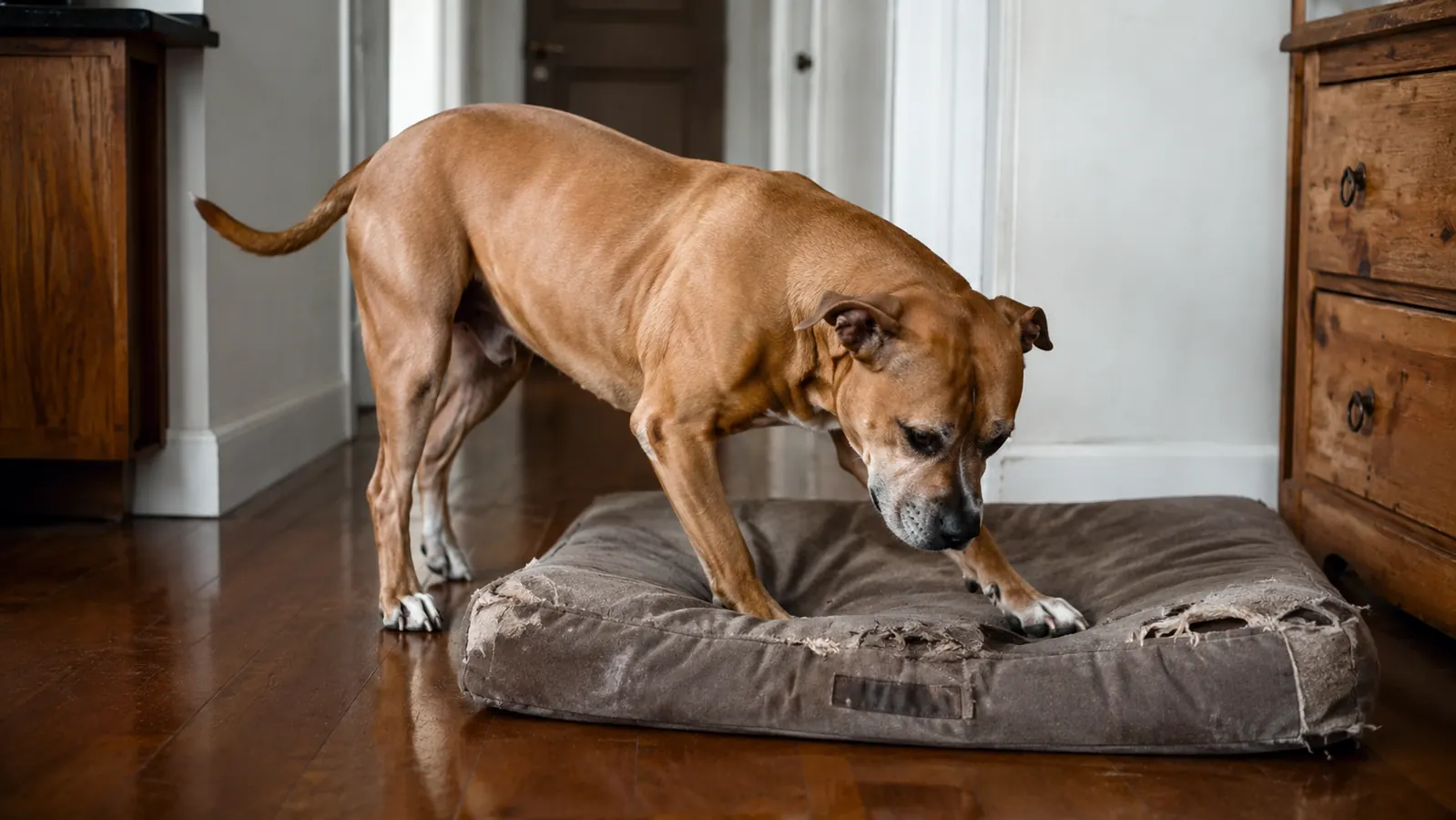
This one surprises a lot of pet parents. If your dog has a bed and actively avoids it to sleep on hardwood or tile, they're not being difficult. They're telling you the bed has probably compressed flat and the floor actually provides more even support. A worn-out cushion creates pressure points; a flat hard floor, while obviously cold, at least doesn't sink unevenly. When a dog chooses the floor, take it seriously.
Their Elbows or Hips Have Developed Calluses
Hygromas and calluses -- the thick, hairless patches on a dog's elbows and hips -- form when a dog spends prolonged time lying on hard or insufficiently padded surfaces. They are a direct physical record of where pressure was applied repeatedly. Light calluses can resolve with a proper orthopedic surface. More advanced hygromas may need veterinary care. Either way, if you're seeing this, the sleep situation needs to change.
They Are a Senior Dog (7 Years or Older, Larger Breeds Sooner)
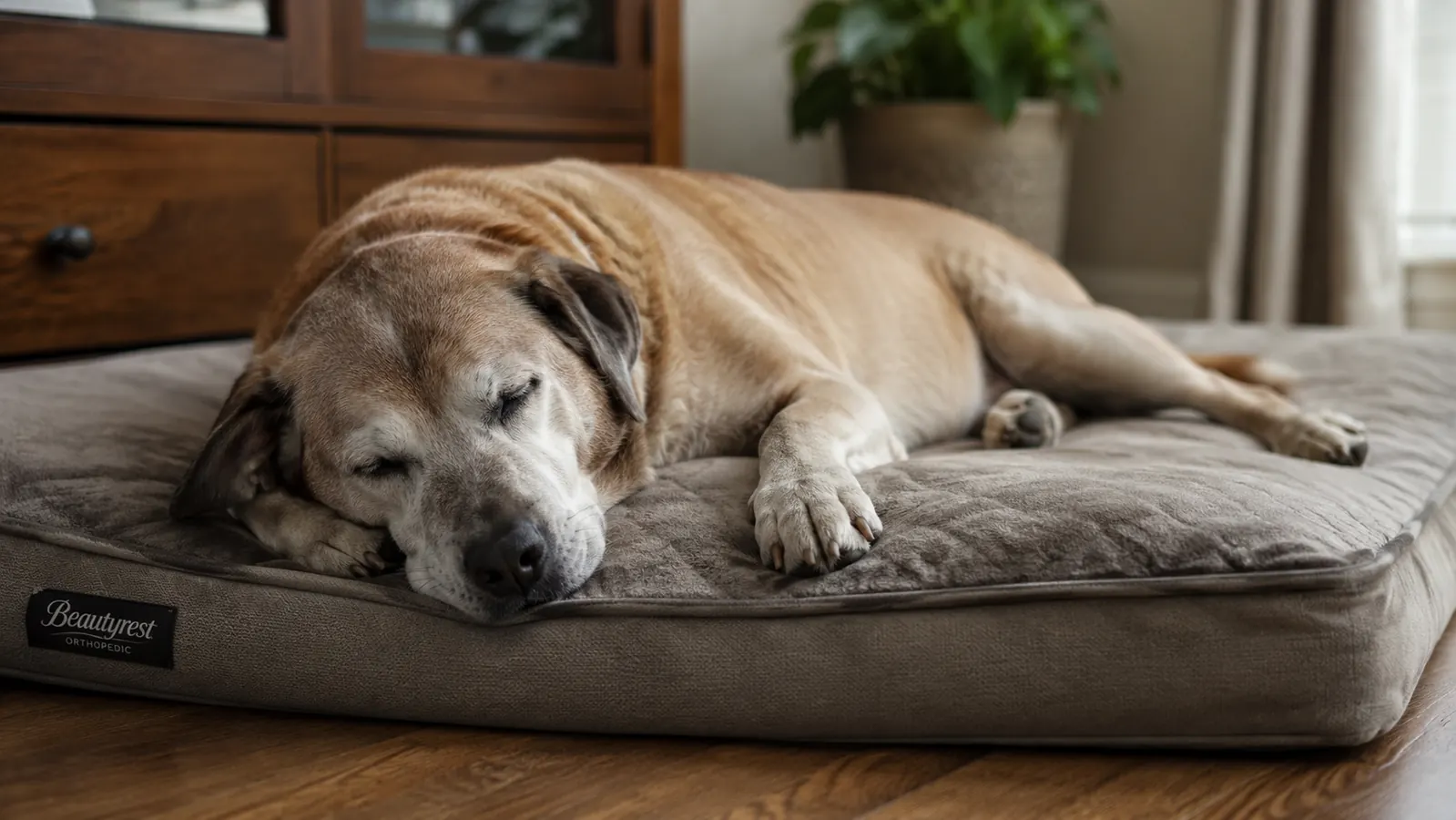
Large breeds age faster than small ones. A German Shepherd or Labrador is considered a senior around age 7. Giant breeds like Great Danes or Saint Bernards hit senior status closer to 5. Cartilage naturally thins, joint fluid decreases, and old injuries become more noticeable. At this stage, supportive sleep isn't a luxury -- it's a core part of managing comfort. If your large-breed dog is 7 or older and still sleeping on a standard cushion bed, an upgrade is overdue.
When a dog chooses bare hardwood over the bed you bought, they are not being stubborn. They are telling you the bed has bottomed out and the floor provides more even support.
They Have Been Diagnosed with Arthritis, Hip Dysplasia, or Elbow Dysplasia
If your vet has given you any of these diagnoses, an orthopedic bed is no longer optional -- it's part of the care plan. These conditions involve cartilage breakdown, bone-on-bone contact, or abnormal joint development, all of which are worsened by prolonged pressure on hard or thin surfaces. The EHEYCIGA bed was specifically designed for large-breed dogs with joint conditions, and the foam depth is substantial enough that even a 100-pound dog sleeping in one spot doesn't compress through to the base.
They Limp or Favor a Leg After Resting
Post-rest limping -- when a dog is stiff coming out of sleep but loosens up after a few minutes of movement -- is a classic sign of joint inflammation. The limping isn't from activity; it's from the joint having been compressed in one position for hours without adequate cushioning. If this happens consistently after sleeping, the sleep surface is almost certainly a contributing factor.
They Are a Large or Extra-Large Breed, Even if Still Young
Body weight is a major variable in bed performance. A standard 3-inch polyester-fill or foam cushion rated for dogs up to 60 pounds isn't going to hold its shape long under an 85-pound German Shepherd. The math is simple: more weight means faster compression. Large breeds often benefit from orthopedic foam even in their younger years because it maintains consistent support instead of creating the gradual sinkhole that cheaper materials form. Think of it as preventive investment in joint health.
They Are Recovering from Surgery or an Injury
Post-operative recovery often requires enforced rest -- sometimes weeks of limited movement. During that period, the surface your dog sleeps on matters enormously. Orthopedic memory foam reduces the pressure concentration at surgical sites or injured limbs, and the raised or bolstered edges of many orthopedic beds help dogs with reduced mobility push themselves up without straining. Most vets recommend an orthopedic surface as standard recovery protocol after orthopedic procedures.
Their Current Bed Is More Than a Year Old and Has Visibly Flattened
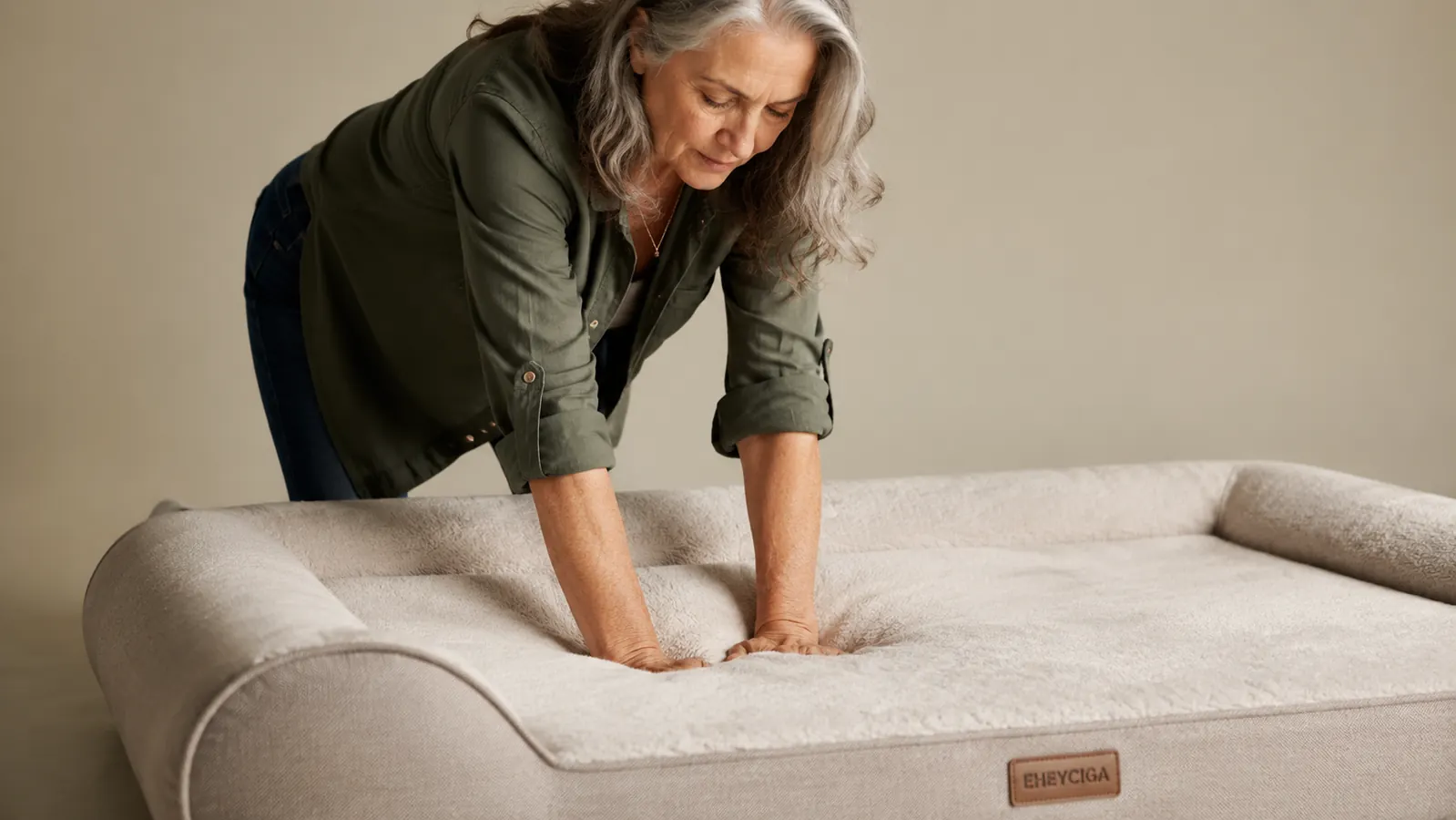
Standard polyester-fill beds typically compress to near-useless within 6 to 12 months under a large dog. Memory foam beds last considerably longer -- 2 to 4 years for quality versions -- but lower-density foams can still bottom out. If you press your palm into your dog's current bed and feel the floor through it within half an inch of pressure, it's time. The EHEYCIGA uses high-density foam that resists this kind of compression and comes with a warranty, which tells you something about how confident the brand is in its durability.
What I Would Skip
Standard polyfill cushion beds with a nice cover and a firm-sounding product description. They look good in product photos, they feel plush in your hands, and they compress to nothing in two months under a large dog. The term 'orthopedic' is not regulated, which means any brand can use it. What matters is foam density (look for high-density or 4 lb/cubic foot foam or higher) and actual foam depth -- 4 inches minimum for dogs over 50 pounds. If the listing does not specify foam density or if the total thickness is under 3 inches, skip it regardless of how the marketing reads.
The word orthopedic is not regulated. Any brand can use it. What you are actually looking for is foam density and total depth -- not the label.
If your dog is showing 2 or more signs on this list, the upgrade is worth it
The EHEYCIGA Orthopedic Dog Bed uses genuine high-density memory foam rated for extra-large dogs, a waterproof liner that holds up to accidents and wet paws, and a zip-off cover that machine washes clean. If you want a deeper look at how it holds up over a full year of heavy use, see our long-term review.
Amazon Check Today's Price on Amazon →