

I bought the EHEYCIGA orthopedic dog bed for my eight-year-old German Shepherd, Brutus, after he started favoring his left hip on walks. At 95 pounds with early-stage hip dysplasia confirmed on X-ray in late 2024, I was not looking for a comfortable nap spot. I was looking for actual joint support. So I read the reviews, and what I found was a lot of effusive praise, a few photos of photogenic dogs, and almost nothing about the things that tripped me up once the box arrived.
This is not a takedown of the EHEYCIGA bed. After five months of daily use, I still recommend it, and Brutus uses it every single night. But there are specific details that the four-and-five-star crowd either never noticed or never bothered to write down, and if you are about to spend money on a bed for a dog with real joint issues, those details matter. Let me cover them.
The Quick Verdict
Solid memory foam and genuine waterproofing at a fair price, but sizing runs about 10 percent larger than labeled, some dogs need a transition period with the flat entry style, and the cover shows pilling after heavy wash cycles. Worth buying with eyes open.
Amazon Check Today's Price →Your arthritic dog is losing sleep on a flat cushion. Memory foam changes that.
The EHEYCIGA orthopedic bed uses 4-inch memory foam with a waterproof liner rated for incontinent dogs. Over 20,000 reviewers have weighed in. Check current availability and sizing before they sell out of the XL.
Amazon Check Today's Price on Amazon →What I Actually Tested and How
Brutus is a neutered male Shepherd, 95 pounds at his last vet visit, diagnosed with bilateral hip dysplasia in October 2024. Before the EHEYCIGA, he slept on a standard polyester-fill dog cushion, the kind that flattens to about an inch of compressed fill inside of three months. Our vet, Dr. Alicia Park at Lakeside Animal Clinic in Gainesville, recommended we move him to memory foam primarily to reduce pressure on the hip joint during the long overnight rest period.
I ordered the XL version based on the listed dimensions (36 inches by 27 inches). I set up the bed on December 3rd, 2024, and I have been using it daily since. In that time, I have washed the cover six times, tracked how the foam has held up, observed how Brutus gets on and off the bed, and paid close attention to his morning gait as a rough proxy for overnight comfort. I am not a veterinarian, but I have a background in healthcare administration and I am careful about separating what I actually observed from what I inferred.
I also spent time in the EHEYCIGA Amazon reviews section reading the one- and two-star reviews specifically, looking for patterns. Three themes emerged: sizing confusion, cover durability, and dogs who simply would not use the bed. I want to walk through all three.
The Sizing Issue Nobody Warns You About
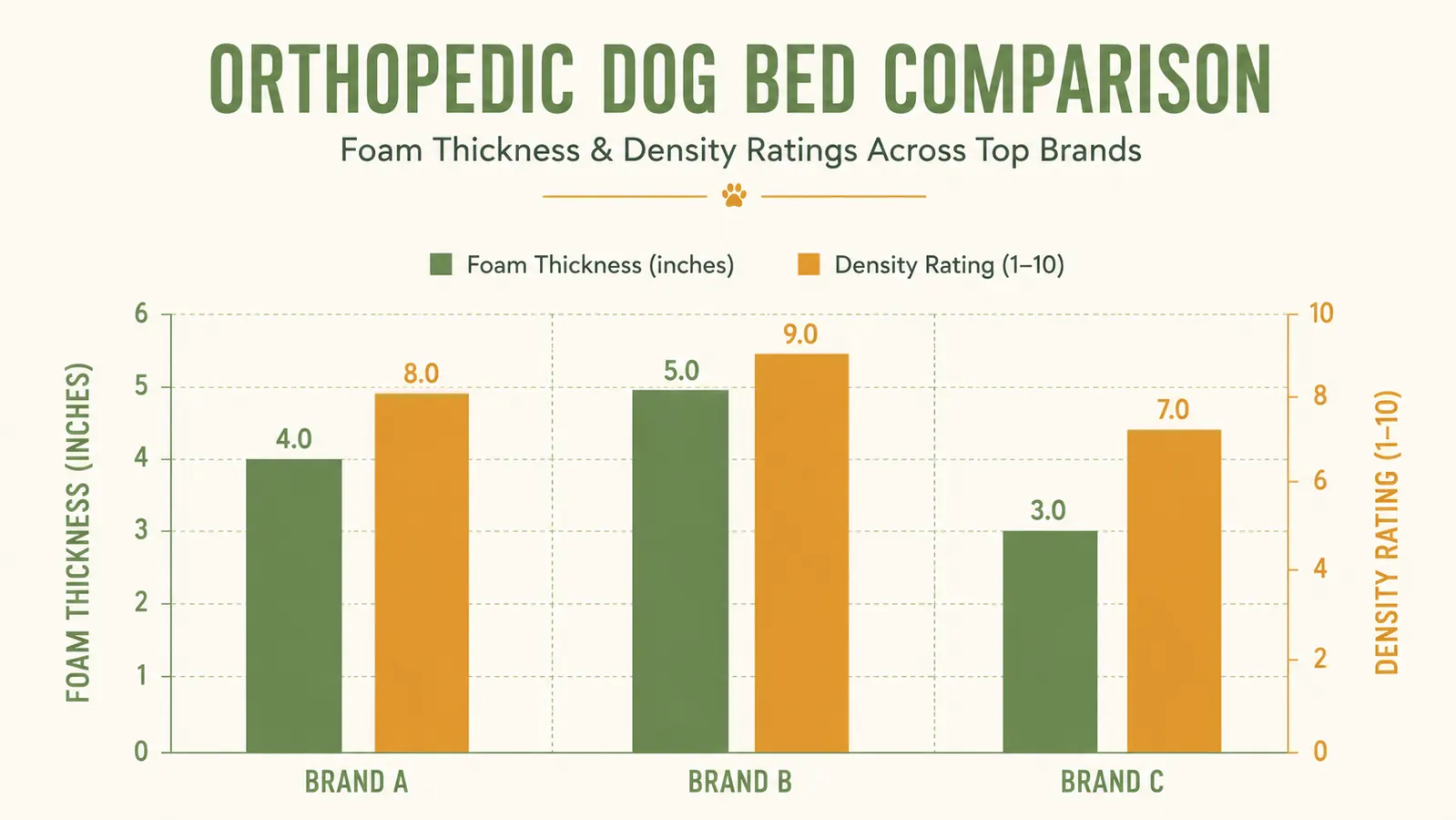
The XL version is listed as 36 by 27 inches. When I measured mine after it had fully expanded, it came out to 38.5 by 29 inches, and the height was 4.25 inches at center rather than the listed 4 inches. That is not a problem for Brutus, who has plenty of floor space, but if you are fitting this bed inside a wire crate, that discrepancy will matter. Several one-star reviews are from people who bought what looked like the right size for a 42-inch or 48-inch crate and then could not get the expanded foam through the door.
The foam needs 24 to 72 hours to fully expand after unpacking. EHEYCIGA says 24 hours in the listing. Mine took closer to 48. If you measure at 24 hours and think you are good for a crate fit, check again at 48. The foam continues to expand more than the compressed-packaging estimate suggests.
My recommendation: measure the interior floor of your crate or sleeping area first. Then buy down one size from what the dimensions suggest, because the actual expanded size will be larger than labeled. For Brutus, the XL is the right call on an open floor, but I would have ordered the L if I were crate-fitting.
The Foam Itself: What Is Good and What I Watch For
The memory foam is the strongest part of this product. After five months under a 95-pound dog sleeping six to nine hours a night, the foam has compressed by roughly a quarter inch at the center of the bed, which is Brutus's main pressure point around his hip. That level of compression is within the range I consider acceptable for medium-density memory foam at this price. By comparison, a polyester-fill cushion compresses to nearly flat in that same timeframe under a dog that size.
The base layer is firmer than the top layer, which is intentional. Large dogs need the counter-pressure of a denser base to prevent bottoming out, where the dog sinks through the foam and effectively ends up resting on a hard floor with a thin cushion on top. At 95 pounds, Brutus does not bottom out on the XL. If your dog is over 110 pounds, I would verify this specifically for your dog's weight class before buying, because the physics of foam compression change significantly past that threshold.
One thing the marketing glosses over: memory foam retains heat. Brutus is a double-coated breed and sleeps hot in the Florida climate we are in. He spent the first two weeks cycling between the EHEYCIGA bed and the cool hardwood floor, particularly on warm nights. He has largely settled into the bed full-time now, but I noticed the adjustment. If you have a thick-coated dog in a warm climate without air conditioning, factor in the heat retention.

The Waterproof Liner: Genuinely Good, With One Caveat
The waterproof liner encasing the foam is one of the better ones I have seen at this price point. It is a TPU-coated fabric rather than the crinkly plastic-feel liner you find on cheaper beds. Brutus had two incontinence incidents in the first month as we adjusted his joint supplement protocol, and both times the liner did its job completely. No moisture reached the foam. The liner zips off and wipes clean easily, or you can toss it in the wash as a separate piece from the outer cover.
The one caveat: the zipper on the liner is a standard plastic zipper, not sealed. If your dog has heavy urinary issues and there is pooling liquid on the bed surface rather than a brief splash, there is a small risk of moisture working through the zipper seam over time. For typical senior dog accidents, the liner performs well. For a dog with severe incontinence, you may want to add a waterproof pad on top of the bed as a first layer of defense.
After five months under 95 pounds of German Shepherd, the foam has compressed by about a quarter inch at center. A polyester-fill cushion at that weight would be flat by now.
Cover Durability: The Honest Answer After Six Washes
The outer cover is a soft plush fabric, and it feels genuinely nice when new. After six wash cycles on cold, tumble dry low, I am seeing mild pilling on the surface, particularly along the edges where Brutus tends to scratch before lying down. The pilling is cosmetic, it does not affect function, but it does age the look of the bed faster than the foam ages.
EHEYCIGA recommends washing the cover every one to two weeks. For a single large dog with no incontinence, I wash mine every three to four weeks. If you wash on that schedule, expect visible pilling by month four to six. If you wash every one to two weeks as recommended, you will hit the pilling stage faster. This is not a defect specific to EHEYCIGA, most plush dog bed covers behave this way, but the glowing reviews rarely mention it because people are writing their review at four weeks, not four months.
The cover zipper is heavy-duty and has held up without issue. The non-slip bottom is adequate on tile and hardwood and has not shifted significantly in five months.

Dogs Who Will Not Use the Bed: A Real Pattern
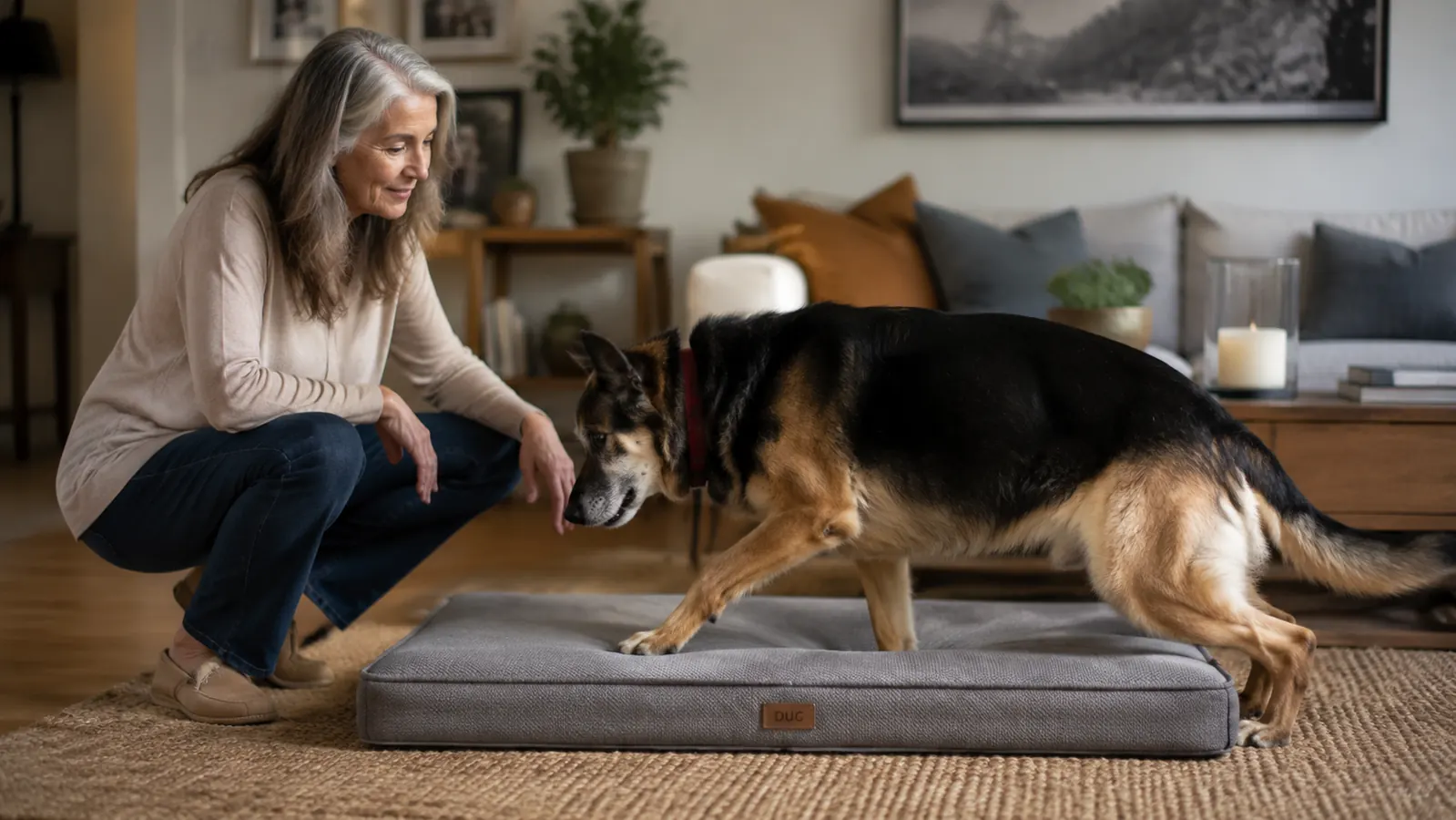
A consistent theme in the lower-star reviews is dogs who simply refuse the bed. In most cases, the photos show dogs sitting next to the bed rather than on it, or sleeping on a rug two feet away. I want to be direct about this: it is usually not a product defect. It is a mismatch between the flat, low-profile entry design and the dog's learned behavior.
Dogs who are used to nesting, circling, and pawing at a raised bolster edge before lying down sometimes resist a flat rectangular foam bed. The EHEYCIGA has a very low bolster lip on two sides. For dogs with significant hip or elbow issues, that low entry is a genuine advantage because the dog does not have to step up or over a rim. For dogs who are behaviorally conditioned to want an enclosed, nest-style feel, the open flat surface can feel exposed.
Brutus took about four days to fully commit to the bed. My approach: I put his favorite sleep blanket on top, placed a treat on it twice a day for three days, and moved the bed to the corner of the bedroom where he already preferred to sleep. By day five he was on it full-time. If your dog is reluctant, do not give up at day two. The transition usually resolves in under a week with a little placement and scent familiarity work.
What I Liked
- Memory foam holds up well under large dogs, no bottoming out at 95 pounds through five months of daily use
- Waterproof liner is TPU-coated rather than crinkly plastic, and it genuinely contains accidents
- Cover zips off cleanly and can be machine washed without degrading the zipper
- Low-profile entry is a real benefit for dogs with hip or elbow dysplasia who struggle to step over raised bolster edges
- Price is fair for the foam quality you receive, and it undercuts comparable orthopedic beds by a meaningful margin
Where It Falls Short
- Actual expanded dimensions run approximately 10 percent larger than labeled, which can cause crate-fit problems
- Memory foam retains heat, which may be an issue for thick-coated or warm-climate dogs
- Outer cover shows mild pilling by month four to six with regular washing
- Foam expansion takes up to 48 hours but listing says 24, which trips up buyers checking for crate fit
- Dogs accustomed to bolster-style nest beds may resist the flat open design for several days
Who This Is For
This bed is a strong match for large and extra-large dogs with diagnosed joint conditions, specifically hip dysplasia, elbow dysplasia, or post-surgical recovery. The combination of thick memory foam, low entry height, and a functional waterproof liner addresses the three main needs in that scenario: pressure relief, accessibility, and accident containment. At the price point, it is one of the better-supported choices in its category for dogs in the 60-to-110-pound range.
It is also well-suited for senior dogs who are beginning to show signs of joint stiffness but have not had a formal diagnosis yet. If your eight-to-ten-year-old large dog is slower on stairs or stiff in the first few minutes after waking up, this bed addresses the likely contributing factor, which is pressure on joints during the overnight rest period. You do not need a diagnosis to make that call.
Who Should Skip It
If you are buying this bed for a crate, verify the exact expanded dimensions for your specific crate model before ordering. The sizing discrepancy between listed and actual measurements is consistent across reviews, and a bed that does not fit a crate is a frustrating return. If crate-fitting is your use case, size down or measure carefully.
If you have a dog over 110 to 115 pounds, particularly a breed that tends to concentrate weight in the hip and rear, I would look at higher-density foam options or a bed with a firmness rating explicitly listed for dogs over that weight. The EHEYCIGA is well-made for its category, but very large dogs benefit from a denser foam base than what is standard at this price point. Also, if your dog is a committed nest-sleeper who strongly prefers a bolster edge, consider whether the flat open design will genuinely get used before committing.
And if your dog has severe active incontinence, layer a waterproof pad on top rather than relying solely on the liner zipper seam.
Brutus uses this bed every night. His morning gait is noticeably better than on the polyester cushion.
The EHEYCIGA orthopedic bed has over 20,000 reviews on Amazon and a current rating of 4.5 stars. The XL version is the right call for most dogs in the 60-to-100-pound range on an open floor. Check current price and size availability before the XL sells out.
Amazon Check Today's Price on Amazon →