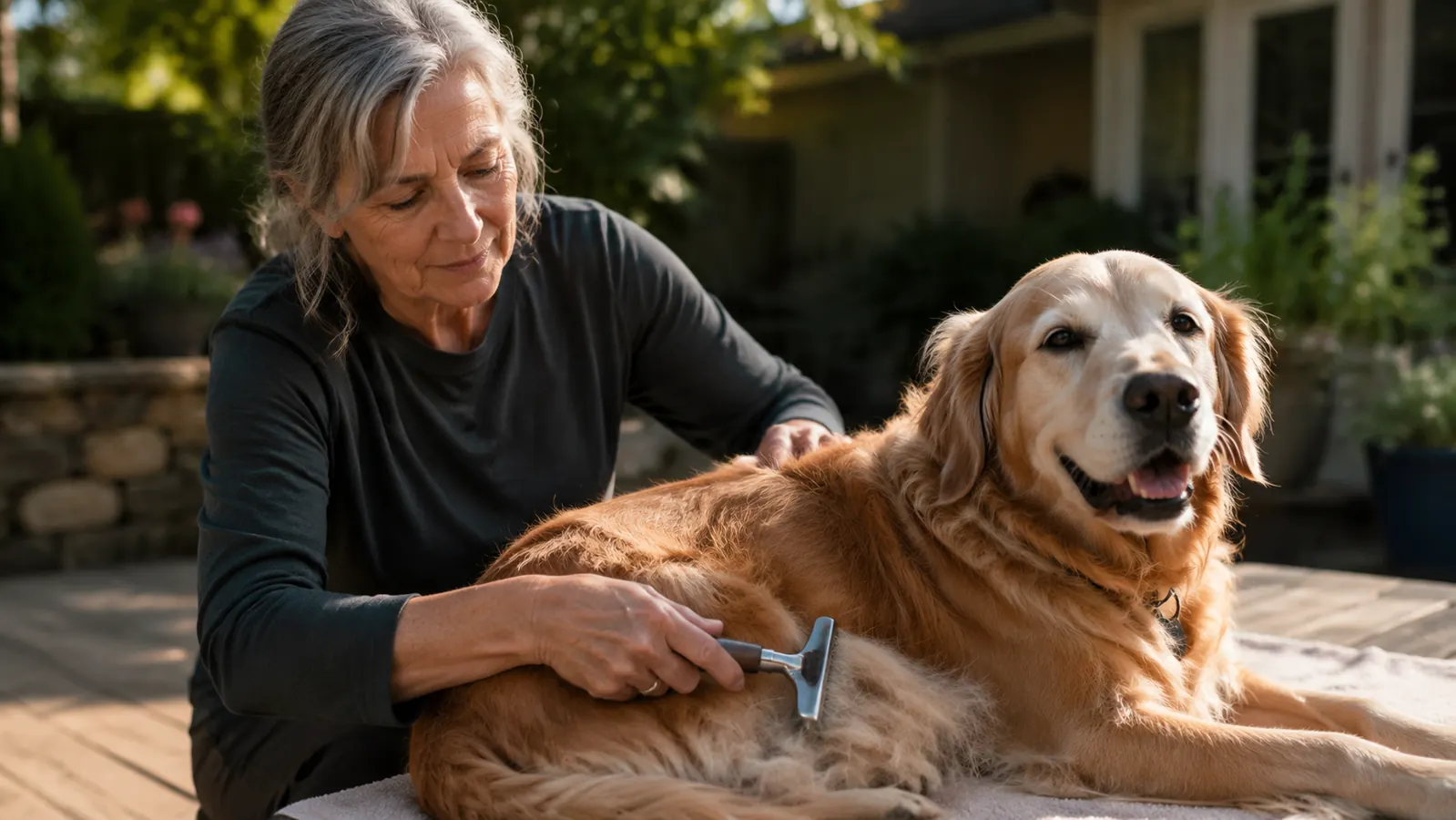
If you share your home with a double-coated dog or a long-haired cat, you already know the problem. You vacuum on Monday and by Wednesday you could knit a sweater from what came off the floor. The hair is not going to stop. But the amount that makes it to your furniture, your car, and the inside of your air filter is almost entirely within your control if you follow a consistent at-home deshedding routine.
I have been grooming a Siberian Husky named Koda at home for four years and a long-haired tabby named Pepper for six. Between the two of them, I have tested a lot of tools and a lot of approaches. The routine below is what actually works, built around a double-sided grooming rake that removes loose undercoat at every coat layer without damaging the guard hairs. You do not need a high-end grooming table, a fancy dryer, or a $90 grooming appointment every six weeks. You need a good rake, a bathtub, and about ninety minutes every three to four weeks.
Your furniture is wearing your pet's undercoat. Here is the tool that changes that.
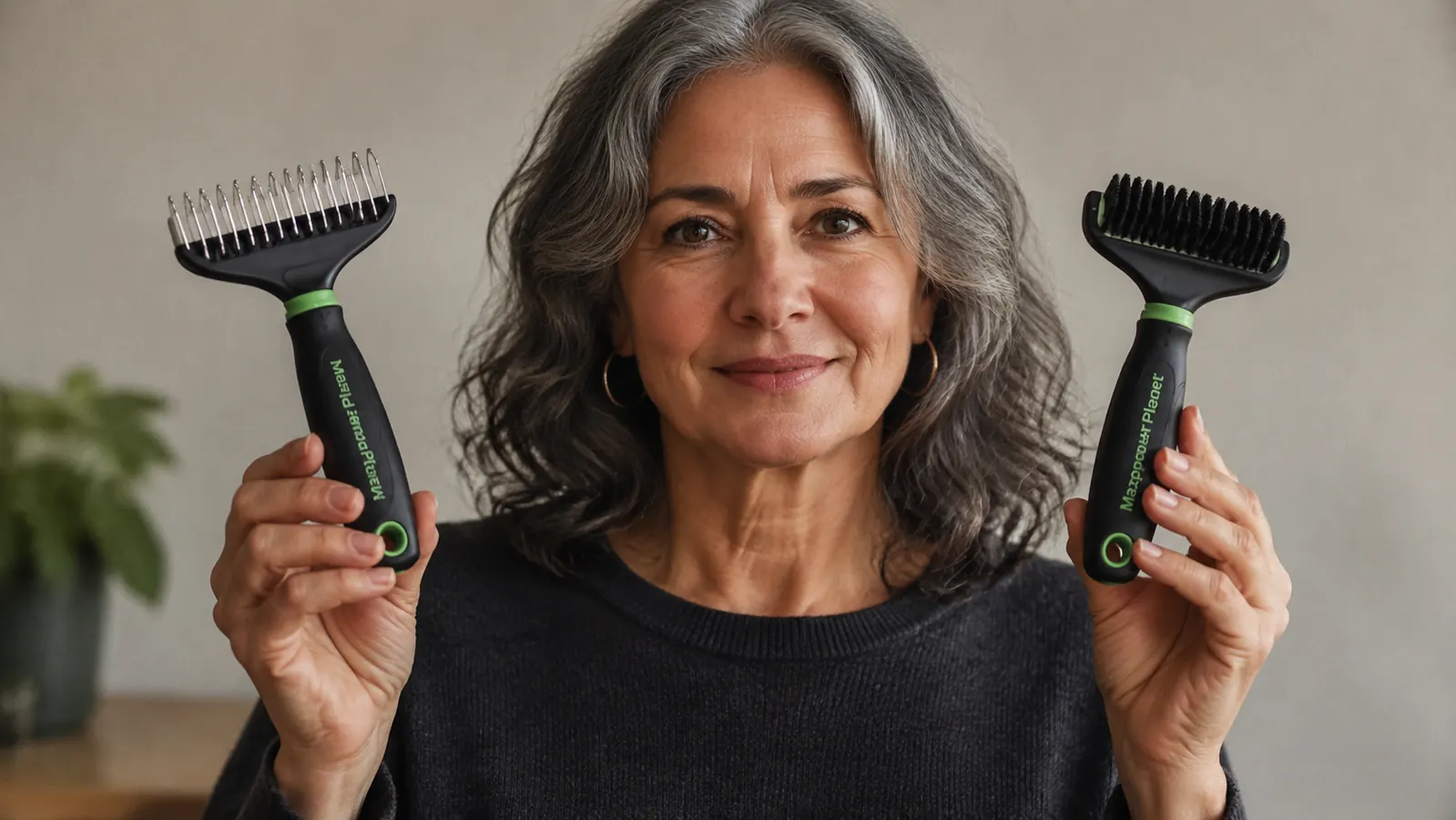
The Maxpower Planet double-sided rake has a 9-tooth dematting side and a 17-tooth deshedding side, rated 4.6 stars across more than 56,000 reviews. It works on dogs and cats, short double coats and long fluffy ones, and it costs about what a single grooming appointment costs. If you are starting this routine from scratch, this is the rake to use.
Amazon Check Today's Price on Amazon →Step 1: Do a Dry Brush Before the Bath
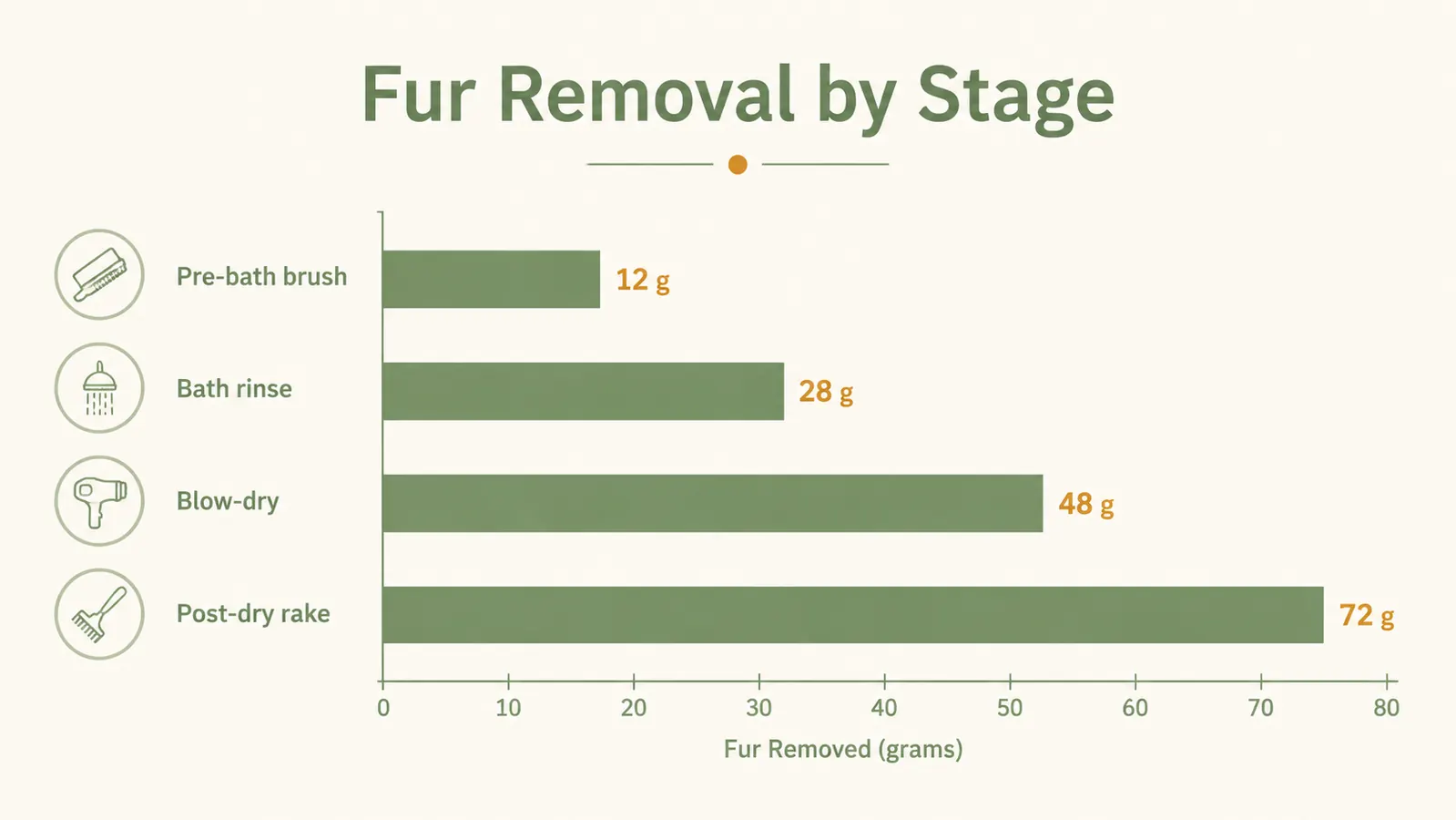
The single biggest mistake people make is skipping the pre-bath brush. If you put a matted or heavily loaded double coat into water, the loose undercoat packs down against the skin and becomes much harder to rinse out. The water essentially felts the loose hair in place.
Start with the dematting side of your rake, the one with the fewer, wider-spaced teeth. For dogs, work in sections: neck, shoulders, back, flanks, hindquarters, chest, and tail. Use short strokes in the direction of coat growth with light to moderate pressure. You are not trying to remove all the undercoat at this stage. You are opening up any mats and breaking apart dense patches so the bath can do its job. On cats, keep sessions to five minutes or less in the pre-bath pass. Most cats tolerate this better than you would expect if you use confident, slow strokes and do not linger in one spot.
For Koda, a full dry brush takes about twenty minutes. For Pepper, I spend eight to ten minutes. When you see a consistent amount of fur releasing with each stroke but no pulling or resistance, you are ready for the bath. A pile of loose fur on your grooming mat at this stage is a good sign, not a problem.
Step 2: Bathe with a Deshedding or Volumizing Shampoo
Water and shampoo loosen the hair follicle-to-follicle bonds in the undercoat, making the loose hairs easier to remove. A deshedding shampoo, or even a moisturizing volumizing shampoo formulated for dogs, opens the coat cuticle slightly and allows loose hairs to release more freely during rinsing. I use a basic oatmeal shampoo for Koda and an unscented cat shampoo for Pepper, both with no conditioner in the rinse cycle. Conditioner adds slip to the coat, which sounds good, but it makes the undercoat hairs harder for the rake to grip in the steps that follow.
Rinse thoroughly. For double-coated dogs especially, an incomplete rinse is one of the main causes of skin irritation after grooming. Koda's coat takes at least four full minutes of rinsing under a warm shower to run clear. While you rinse, use your fingers in a raking motion against coat growth to help push loosened hairs out. You will see them washing down the drain. A mesh drain catcher is essential at this step.
Step 3: Blow Dry and Rake Simultaneously
This is the step that separates an average at-home deshed from a professional one. You do not want to air dry a double-coated dog or a long-haired cat. Air drying allows the outer coat to dry first while the undercoat stays damp against the skin, creating conditions for hot spots and skin irritation in dogs, and mats and tangles in cats.
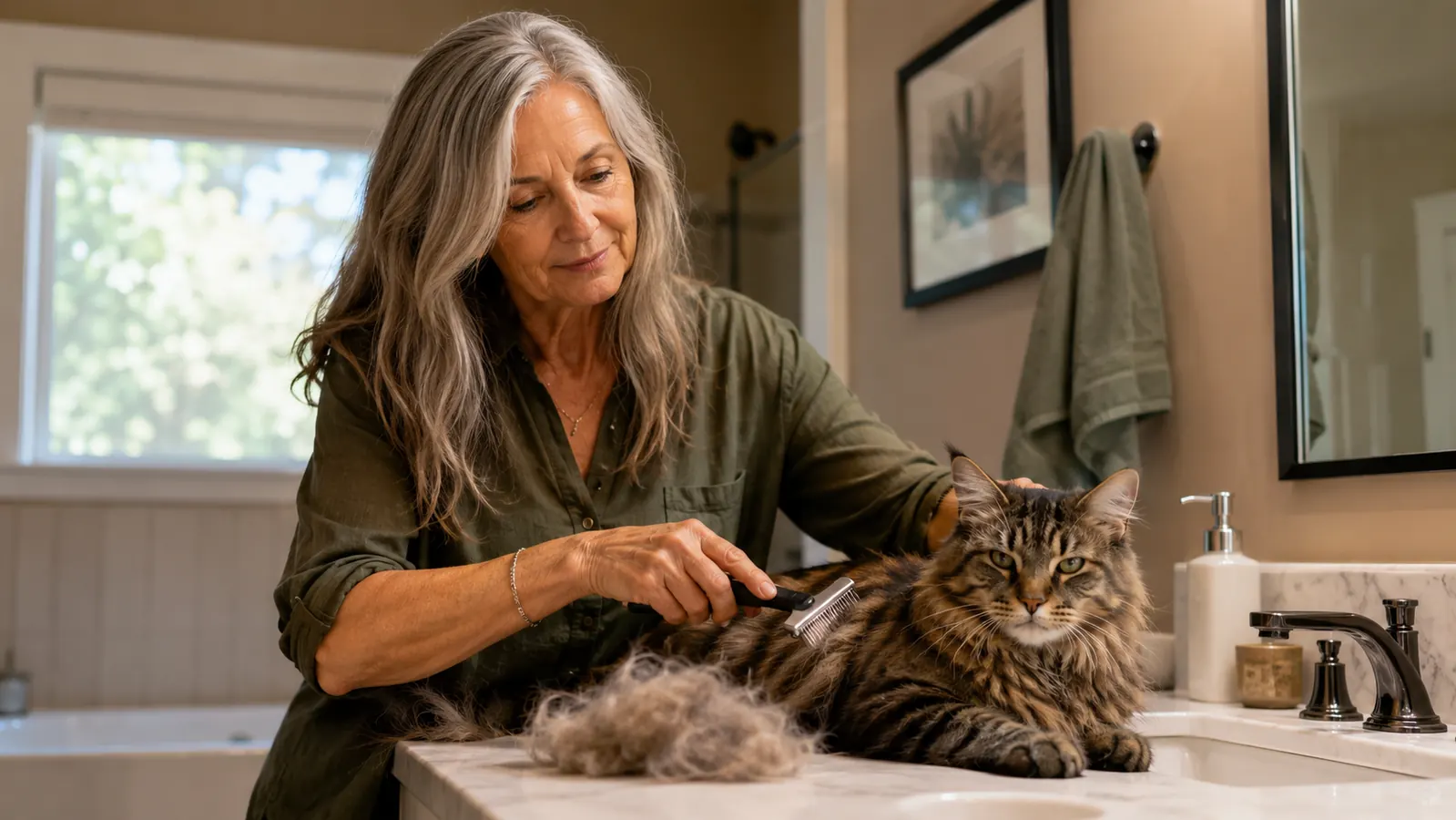
Use a hand-held blow dryer on its lowest or medium heat setting, held at least six inches from the coat. Work section by section, directing airflow against the grain of the coat to lift and separate the outer guard hairs from the undercoat. As each section begins to dry, immediately follow with the 17-tooth deshedding side of your rake. The combination of warm moving air and the rake moving against coat growth releases a dramatic volume of undercoat. This is where the serious work happens. For Koda, I typically fill a kitchen trash bag to about one-third full during this stage. It is not gross. It is just the job.
Keep the dryer moving. Holding it stationary over one area can cause thermal discomfort even at low heat. Watch your pet for signals: a flattened ear, a shift in body weight, a tail tuck. Take breaks if needed. Most dogs and cats habituate to the dryer noise and warmth within two or three sessions if you keep the early sessions shorter and reward throughout.
Air drying a double coat is the one step most home groomers skip that professional groomers never skip. The blow-dry-while-raking combination is where half the loose undercoat actually comes out.
Step 4: Final Rake Pass on the Dry Coat
Once the coat is completely dry, do one final pass with the deshedding side of the rake working with the coat grain this time. This pass removes any remaining loose hairs that the dryer dislodged but did not fully eject, and it smooths the coat so guard hairs lie flat. It also gives you a chance to check for any areas you missed during the blow-dry step, typically behind the ears, under the armpits, the lower chest, and the base of the tail.
For cats, this final pass is often what they enjoy most because it mimics a full-body petting motion. Keep strokes long and slow. Pepper rolls onto her back during this step, which I take as a reasonable sign of approval. When the rake comes away clean after two or three strokes in a given section, that section is done.
Step 5: Set a Maintenance Schedule and Stick to It
A single deep deshed does a lot of work, but the undercoat grows back continuously. Heavy-shedding breeds like Siberian Huskies, German Shepherds, Golden Retrievers, Maine Coon cats, and Norwegian Forest Cats need a full deshedding session every three to four weeks. Moderate shedders, such as Border Collies, Labradors, and domestic long-hair cats, can go four to six weeks between full sessions.
Between full sessions, a five-minute dry brush with the deshedding rake two or three times a week keeps loose hair from building up in the coat. This is not a grooming session, just a quick pass over the back, flanks, and hindquarters while your pet is calm. Five minutes done consistently is more effective than a ninety-minute marathon done once every two months. The two-to-three-times-per-week dry brushes are what keep your vacuum filter looking reasonable between full sessions.
Write the schedule into your calendar as a recurring appointment. I have Koda's full sessions blocked every four weeks and the quick maintenance passes on Tuesday, Thursday, and Sunday mornings. Pepper gets a full session every four weeks and a quick brush-through on Tuesday and Saturday. The regularity matters more than the precise interval.
What Else Helps
Grooming tool quality is the biggest lever, but a few other variables affect how much shedding you are dealing with. Diet plays a real role. Dogs and cats shedding more than baseline, with a dull coat or flaky skin, may be responding to a low-fat diet or one that does not include adequate omega-3 fatty acids. A fish oil supplement added to meals, specifically EPA and DHA rather than plant-based ALA, often reduces shedding noticeably within six to eight weeks. This is not a replacement for brushing, but it reduces the volume of loose hair your rake has to deal with.
Hydration also affects coat quality. Pets on dry kibble-only diets may shed more than pets whose meals include some moisture. Adding a small amount of water to dry kibble or transitioning to a wet food portion of the diet can help. These are not dramatic changes, but they support the grooming work you are doing rather than working against it.
Finally, be honest about your rake. A rake that has bent, splayed, or broken tines drags on the coat instead of gliding through it. The Maxpower Planet rake I have used consistently for over a year has held its tine spacing and sharpness well at its price point. When I have loaned it to neighbors using cheaper rakes that cost the same, the difference in how much undercoat they pull out in a single pass is significant. The geometry of the teeth, specifically the angle and spacing, matters more than the material. A rake that catches and pulls instead of gliding will also make your pet less cooperative over time, which compounds the problem.
The right rake makes the difference between a pet that tolerates grooming and one that walks away.
The Maxpower Planet double-sided rake handles both deshedding and dematting, works equally well on dogs and cats, and has held up under weekly use without bending or splaying. More than 56,000 owners rate it 4.6 stars. Check current price before your next session.
Amazon Check Today's Price on Amazon →