
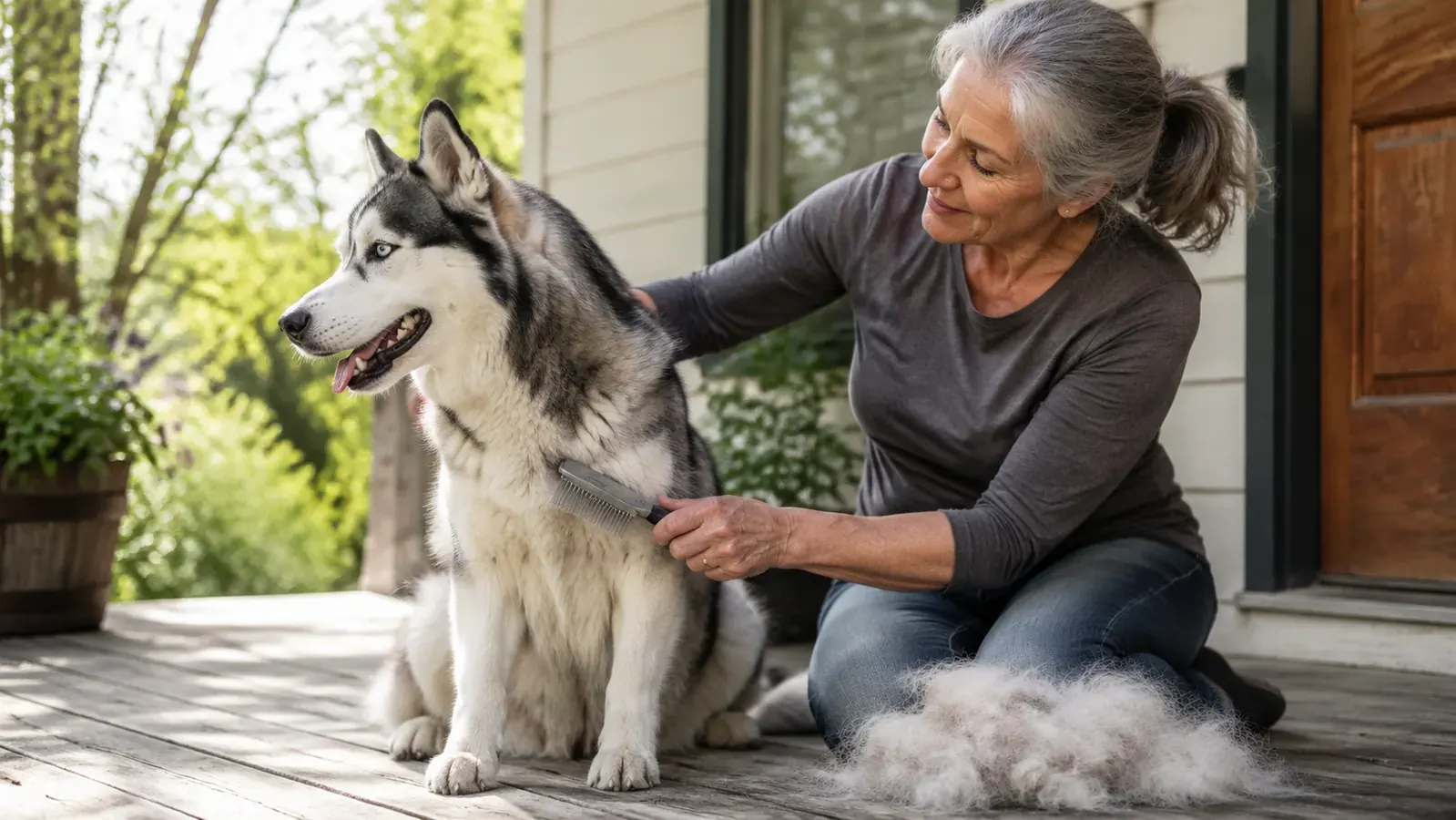
Odin is a three-year-old male Siberian Husky, 58 pounds, and he sheds the way a river floods: constantly in the background, then catastrophically in the spring. I have owned double-coated dogs for most of my adult life, and I had tried the usual toolkit before landing on the Maxpower Planet double-sided grooming rake in early 2024. Slicker brushes, undercoat combs, the FURminator, and one embarrassingly expensive cordless grooming vacuum that Odin treated like a mortal enemy. The Maxpower Planet rake is now the only tool I reach for at least once a week. This review covers what changed, what the tool actually does, and where it still leaves me wanting more.
One thing upfront: with over 56,000 reviews on Amazon and a 4.6-star average, this tool has no shortage of fans. What those reviews tend to gloss over is the learning curve, the difference between using the 9-tooth side versus the 17-tooth side, and what happens to this tool after heavy use across a full year. That is what I am covering here.
The Quick Verdict
The best $17 you will spend on dog grooming if you have a double-coated breed. The two-sided design genuinely earns its keep, but it requires real technique to avoid over-raking sensitive skin.
Amazon Check Today's Price →Still lint-rolling the couch twice a day? This is probably why.
The Maxpower Planet double-sided rake pulls loose undercoat before it reaches your furniture. At under $17, it costs less than one professional grooming session.
Amazon Check Today's Price on Amazon →How I've Used It: The Testing Setup
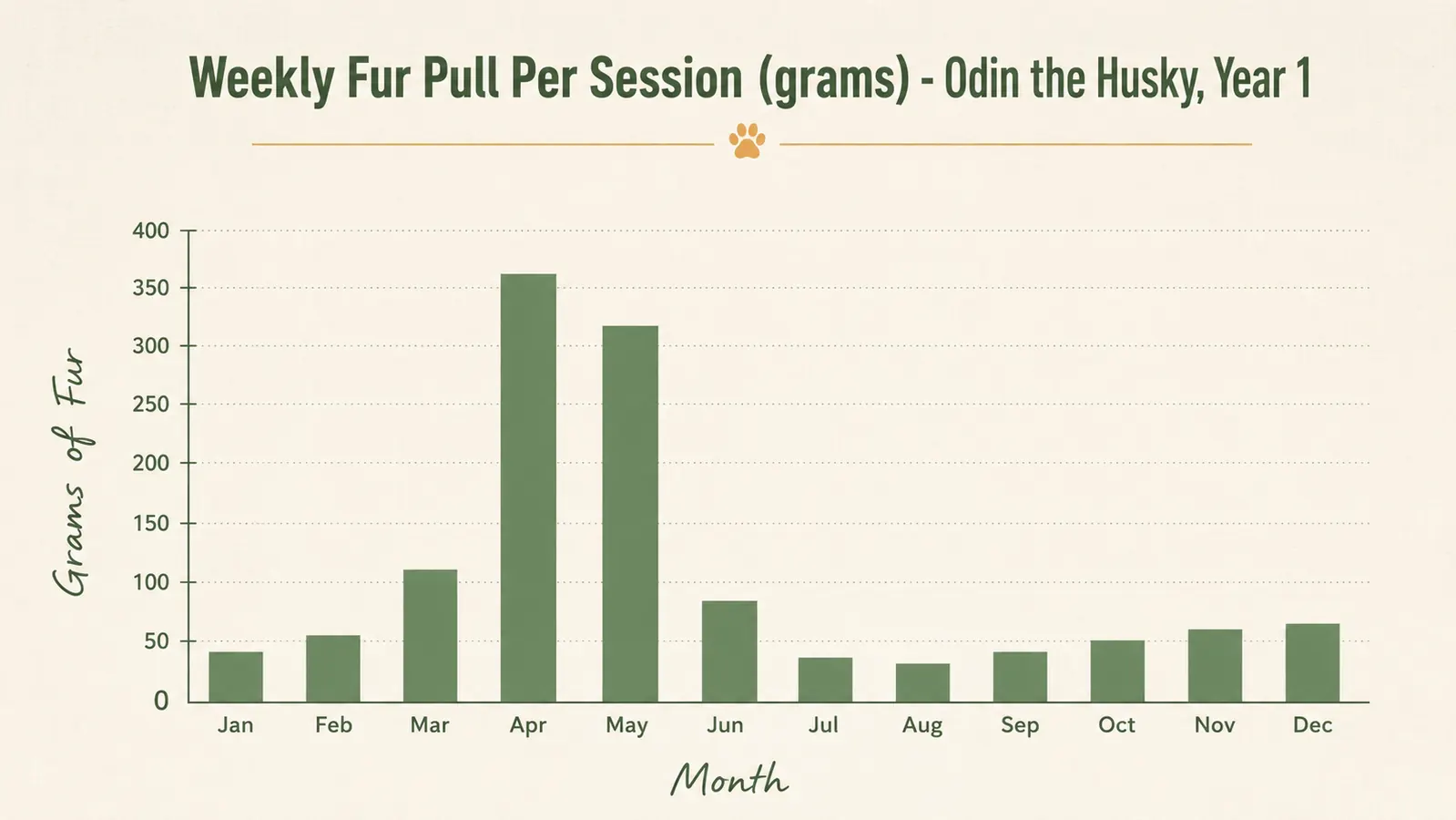
My routine is simple: one session per week, every week, for the past 52 weeks. Sessions happen outside on the back deck (a decision I will never reverse), and I time them. A typical maintenance session with Odin runs 15 to 20 minutes. During blow coat season in April and May, I run two sessions per week and each one pushes past 30 minutes. I keep the pulled fur in a mesh laundry bag and weigh it after each session. Yes, I know that is excessive. The point is I have real, consistent data on what this tool pulls out over time, not just an impression from a few uses.
I also tried the rake on my neighbor's nine-year-old Maine Coon, Miso, twice during this period. That experience is worth noting separately because the results were very different from Odin. More on that in the coat-type section below.
I did not receive this product free or at a discount. I bought it at the listed price after reading through about forty Amazon reviews and deciding to give it an honest trial.
What the Two Sides Actually Do (And Why Most People Use Them Wrong)
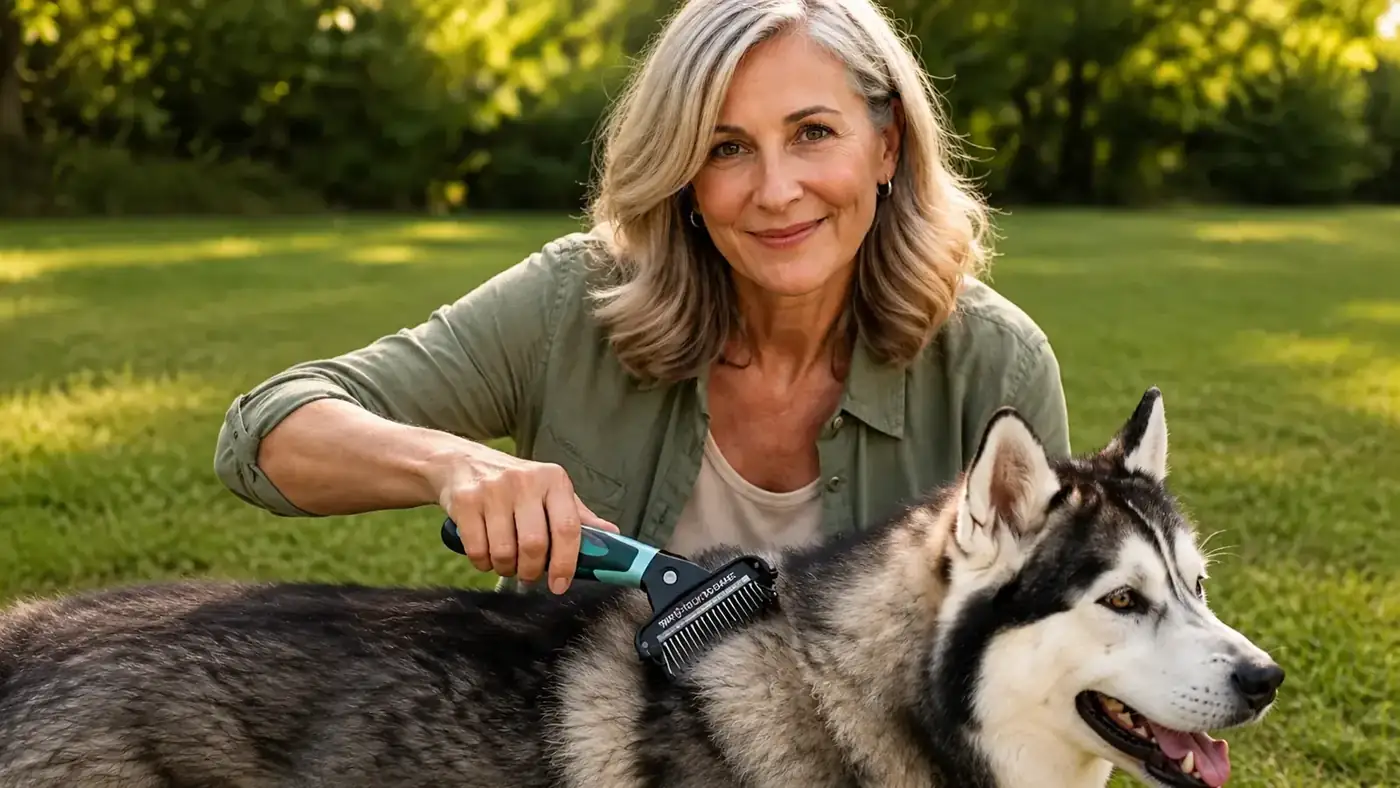
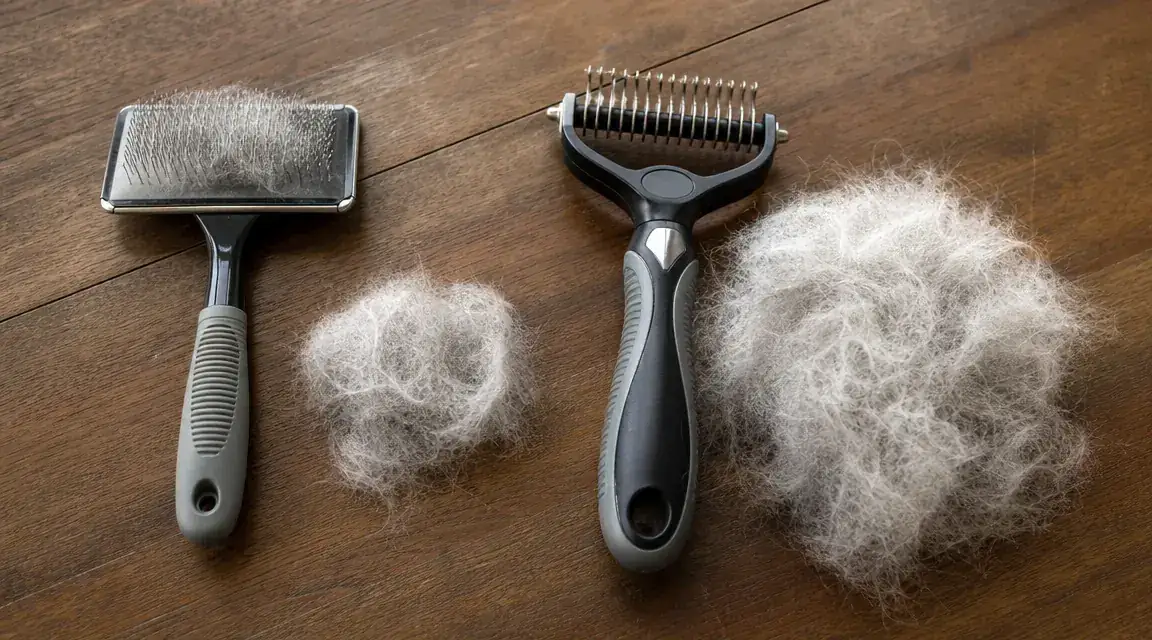
The Maxpower Planet rake has two working sides on a single handle. The 9-tooth side features wider-spaced, longer rounded pins. The 17-tooth side has closer-spaced, slightly shorter pins. Most owners flip the tool at random. The correct way to use it is to think of them as two separate stages of a grooming session, not interchangeable options.
The 9-tooth side is your dematting tool. Use it first, in areas where the undercoat has started to felt or mat, particularly around Odin's haunches, behind his ears, and along the collar line. Work slowly in the direction of growth. The wider tines lift and separate clumped undercoat without yanking the topcoat. I made the mistake early on of pressing too hard here. Odin tolerated it but his skin showed faint redness in a couple of spots after the session, which was entirely my fault for rushing.
Once the coat is separated and mats are cleared, flip to the 17-tooth side. This is the deshedding pass. Use longer, sweeping strokes that follow the body. This is where you pull the most loose undercoat in the least amount of time. During peak blow coat season, I was pulling between 40 and 60 grams of fur per session in this phase alone. To put that in perspective, one session during May produced enough fur to stuff a small decorative pillow. This is not an exaggeration.
During blow coat season, one 30-minute session with the 17-tooth side pulled enough loose Husky undercoat to stuff a small decorative pillow. I weighed it. It was not a close call.
Durability After 52 Sessions: What Held Up and What Did Not
The handle is a rubberized grip over a plastic core. After a year of weekly sessions in outdoor conditions, the grip shows no cracking or splitting. My hands sweat in warm weather and the rubber has not become slick or tacky. The ergonomics are genuinely comfortable for a 20-minute session. I do not have wrist or hand strain after grooming, which was a real issue with the FURminator's narrower grip.
The tines are stainless steel and they have stayed straight. I have not bent any tines despite applying real pressure during dematting passes. One thing I noticed around the eight-month mark: the connection point between the head and the handle developed a faint wobble. It is not serious and has not worsened, but it is there. On a $17 tool, I consider it acceptable. If I were paying $50 for this, it would be a red flag.
Cleaning is simple. Pull the fur clump off the tines after each pass, then rinse the head under running water and let it air dry. Fur does not pack deeply between the tines the way it does on a slicker brush. Total cleanup after a session takes about 90 seconds.
Performance on Different Coat Types: Odin vs Miso
On Odin's dense double coat, the Maxpower Planet rake is close to ideal. The tine length is right for reaching through the outer guard coat to the undercoat without pulling the guard hairs. The wider spacing on the 9-tooth side handles his thicker mats without snagging. The main limitation is his tail, which is thick and tightly curled. The rake is not nimble enough to work through the tail efficiently. I finish that area with a fine-tooth comb.
On Miso the Maine Coon, the experience was noticeably different. Maine Coons have a silky semi-long coat with a lot of volume but less density than a Husky undercoat. The 17-tooth side worked well for basic deshedding. However, the 9-tooth side was too aggressive for Miso's lighter mats, two of which I deepened by rushing. For cats and lighter-coated dogs, I would recommend a gentler dematting comb for that first pass and use the rake only for the deshedding stage.
If you have a golden retriever, border collie, German shepherd, or any other breed with a thick two-layer coat, you will likely get the same strong results I did with Odin. For single-coated breeds like greyhounds, poodles, or Maltese, this tool is not the right choice. A slicker brush does the job more gently and without any risk of over-raking the skin beneath a thin coat.
Comparing It to the FURminator and a Budget Undercoat Comb
I ran the Maxpower Planet rake and the FURminator side by side for four sessions to get a direct comparison. The FURminator pulled more fur per stroke on the very first pass through an area. The blade design is more aggressive and it hooks loose undercoat efficiently. But it also pulled more topcoat than I was comfortable with on Odin, and after two consecutive sessions his coat looked slightly dull. The FURminator instructions say not to over-use it, and I think a lot of owners ignore that.
The Maxpower Planet rake is gentler pass-for-pass, which means you may need more strokes to clear the same area. For a cooperative dog who tolerates longer sessions, that is not a real disadvantage. For a wriggly puppy or a cat who tolerates five minutes maximum, the FURminator's efficiency per stroke matters more. For a full breakdown of cost, tine design, and coat-type compatibility, I put together a detailed look in the Maxpower Planet vs FURminator comparison.
The budget undercoat comb I tested (a no-brand rake from a local pet store at around $9) bent two tines in the second session against a moderately dense mat on Odin's hip. The Maxpower Planet rake's stainless tines have been through far heavier use without any bending. The $8 price difference is very much earned.
Where I Wish It Were Better
The head size is good for large dogs but can feel clumsy in tight areas: behind ears, in the armpits, and around the paws. I keep a small pin brush for those spots and just accept that the rake handles the large body panels. It is not a design flaw so much as a reality of what a tool this size can do.
There is no tine-spacing adjustment. You get the 9-tooth side and the 17-tooth side and that is it. For a tool at this price point, that is entirely reasonable. But owners with multiple dogs of different coat densities will likely want to have two or three tools anyway. I use the rake on Odin and a separate slicker brush on my parents' goldendoodle, and the two tools do not overlap much in their jobs.
I would also like a slightly longer handle for large dogs. Reaching across Odin's back at full extension during a long session puts a mild strain on my shoulder. Groomers who work on giant breeds professionally would likely feel this more than I do.
What I Liked
- Two-sided design covers dematting and deshedding in one tool without switching products
- Stainless tines held up through 52 sessions without bending or dulling
- Comfortable rubberized grip, no hand fatigue during 20-minute sessions
- Outstanding value at under $17, cheaper than one professional grooming appointment
- Easy to clean: fur clumps pull off quickly and the head rinses clean in under two minutes
- Significantly gentler on guard coat compared to the FURminator over repeated use
Where It Falls Short
- Head-to-handle connection developed a faint wobble around month eight
- Too clumsy for tight areas like armpits, behind ears, and paws
- 9-tooth dematting side can irritate sensitive skin if you rush or press too hard
- Not well-suited for single-coated breeds or lightweight cat coats
- No tine-spacing options, so owners with multiple coat types need additional tools
Who This Is For
If you own a double-coated dog, including Huskies, German shepherds, golden retrievers, Bernese mountain dogs, Samoyeds, Akitas, border collies, Australian shepherds, and similar breeds, this rake should be in your regular rotation. It is also a strong choice for dense-coated cats like Maine Coons and Norwegian Forest Cats, with the caveat that you should use the 9-tooth side carefully on lighter mats. At under $17, it is genuinely difficult to argue against trying it. The cost of one grooming appointment where you drop your dog off for a bath and blowout typically runs $60 to $100 or more. Learning to do the deshedding work yourself with a tool like this one, combined with a good step-by-step routine, can cut professional grooming frequency significantly. I walk through my full at-home deshedding routine, including sequencing tools and managing a Husky's blow coat, in my guide to deshedding a dog or cat without a groomer.
Who Should Skip It
If your dog is single-coated, short-haired, or has sensitive skin that reacts easily to grooming pressure, this tool is likely the wrong choice. A rubber curry brush or a soft-bristle brush will give you a more comfortable session without any risk of over-raking. Same goes for very small dogs under 10 pounds, where the head size makes precise work difficult. The Maxpower Planet rake is built for volume and density, not for delicate coats or small bodies.
A year in, I still reach for this rake every single week.
The Maxpower Planet double-sided grooming rake is still my go-to for Odin after 52 sessions. For a double-coated dog owner looking to cut professional grooming costs and stay ahead of shedding season, the value is hard to match.
Amazon Check Today's Price on Amazon →