
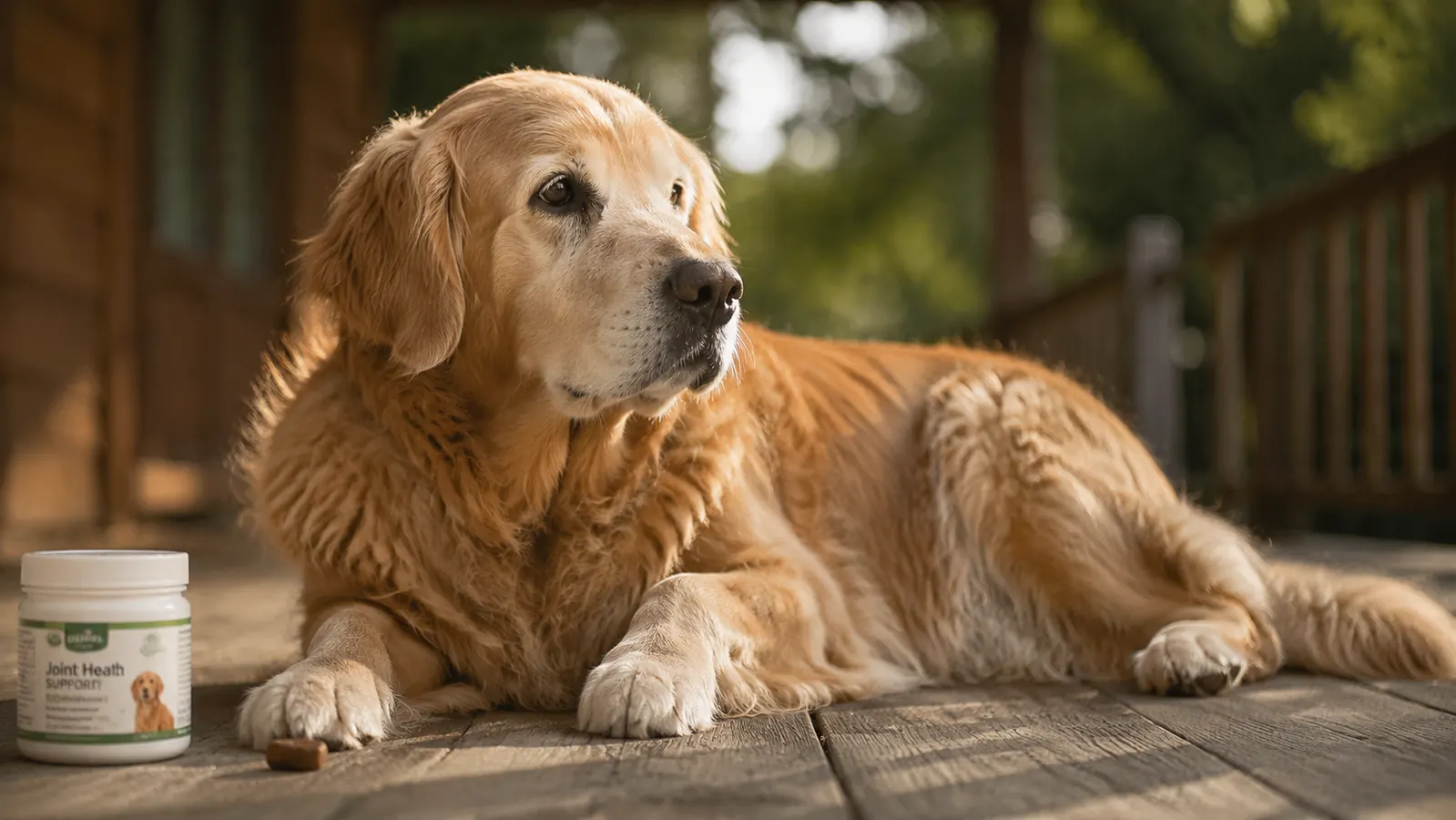
My Lab, Hazel, turned 10 last spring and I started noticing the small things first. She took longer to stand up from her bed in the morning. She hesitated at the bottom of the stairs instead of bounding up them. On cold days she walked with a shorter stride than usual. None of it was dramatic. None of it was the kind of thing a vet visit would flag as an emergency. But it was enough to make me pay closer attention to what I was feeding her joints.
Glucosamine supplements are one of the most studied interventions for canine joint health, and Nutramax Cosequin is the name that comes up most often in veterinary conversations. Before I started Hazel on it, I wanted to understand the actual mechanism behind the benefit, not just trust the 78,000-plus Amazon reviews. Here are the 10 reasons glucosamine supplementation genuinely helps senior dogs, based on what the research shows and what I have seen firsthand.
Your senior dog's stiff mornings deserve a real solution, not just a wait-and-see approach.
Cosequin by Nutramax is the most clinically referenced glucosamine supplement for dogs and the one most vets mention by name. Over 78,000 reviews, 4.7 stars, and a manufacturer that does third-party purity testing.
Amazon Check Today's Price on Amazon →It Gives the Body the Raw Material to Rebuild Cartilage
Cartilage does not have a blood supply. It depends entirely on the fluid in the joint to deliver nutrients. Glucosamine is a key building block for glycosaminoglycans, the structural molecules that give cartilage its cushioning ability. When a dog ages, the body produces less glucosamine naturally. Supplementing it gives the joint tissue the substrate it needs to maintain and partially repair itself. Think of it less as a drug and more as filling a deficiency that comes with age.
It Supports Synovial Fluid Volume and Viscosity
Healthy joints are lubricated by synovial fluid, a thick liquid that reduces friction between bone surfaces. Glucosamine supplementation supports the production of hyaluronic acid, one of the main components of synovial fluid. Thicker, more abundant fluid means the joint surfaces glide more smoothly. For a dog who is stiff in the morning but loosens up after walking around, this is often the mechanism that explains the improvement.
Chondroitin Pairs with Glucosamine to Slow Cartilage Breakdown
Most quality formulas combine glucosamine with chondroitin sulfate, and Cosequin is one of them. Chondroitin inhibits enzymes that break down cartilage, so the two ingredients work on opposite ends of the same problem. Glucosamine supports new cartilage formation. Chondroitin slows the destruction of existing cartilage. Together they address both sides of the degenerative process. Formulas with both tend to outperform glucosamine-only products in clinical settings.
It Has a Meaningful Mild Anti-Inflammatory Effect
Glucosamine is not an NSAID and should not be treated as one. But research does show a modest anti-inflammatory effect at the joint level. It appears to reduce levels of certain cytokines that drive the inflammatory cycle in arthritic tissue. This is not enough to replace a veterinary pain management plan for severe cases, but for dogs with mild to moderate joint discomfort it can meaningfully reduce the background inflammation that makes movement painful.
The Safety Profile Is Exceptionally Good
One reason glucosamine supplements remain popular even after decades of veterinary use is that the side effect risk is very low. Unlike long-term NSAID use, which requires periodic liver and kidney panels, glucosamine does not carry meaningful organ toxicity risk at recommended doses. Occasional loose stools or mild GI upset in the first week is the most common complaint. For owners who are cautious about daily pharmaceutical intervention, that safety record matters.
Consistent Daily Dosing Produces Cumulative Results
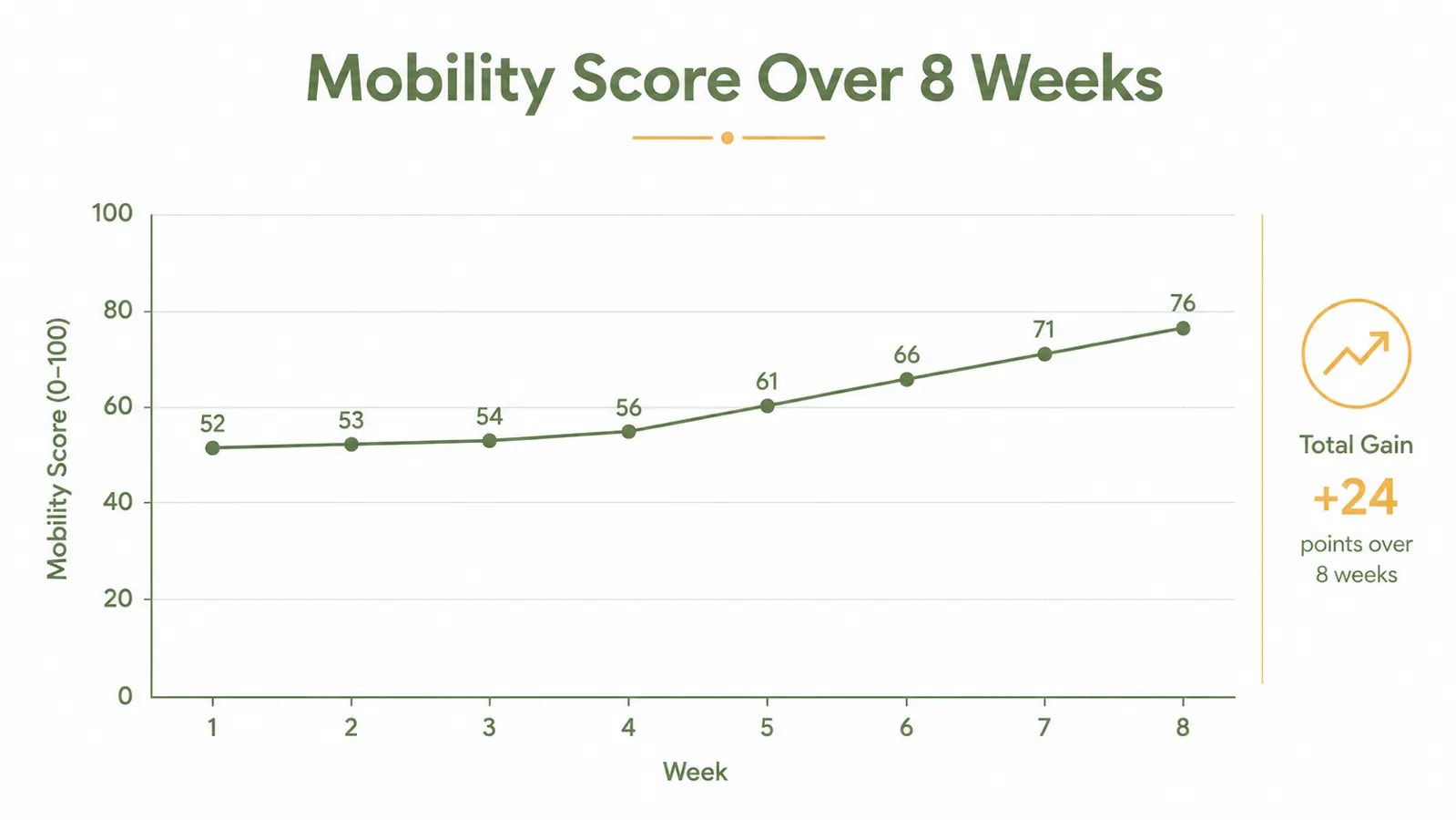
Glucosamine is not a pain reliever you give when things flare up. It works by maintaining a steady pool of raw material in the body's tissue. Most owners report noticing a difference around the four to six week mark, with further improvement out to three months. The mistake is stopping after a few weeks because you do not see an immediate effect. Hazel showed marginal change at week three, then meaningfully better movement by week eight. Consistency is the whole game.
It Is Most Effective When Started Before Severe Damage Occurs
Glucosamine cannot reverse advanced cartilage loss. Once the cushion is gone, it is gone. But it is highly effective at slowing progression in dogs with early to moderate joint changes and at maintaining function in dogs who are still mobile. Senior dogs between seven and eleven who are showing mild stiffness are in the ideal window. Waiting until a dog is limping regularly means starting the intervention after significant damage has already accumulated.
Third-Party Tested Formulas Deliver Actual Labeled Doses
Not all supplements contain what they claim. Independent testing by organizations like the National Animal Supplement Council (NASC) and ConsumerLab has found meaningful label discrepancies in some brands. Nutramax Cosequin is manufactured in an FDA-registered facility and is NASC-quality-seal certified. When you pay for a glucosamine supplement, you want to know the dose in the chew actually matches the label. With discount brands this is genuinely not guaranteed.
Large and Giant Breeds Benefit Disproportionately
A 75-pound Labrador puts roughly three times her body weight through each hip joint with every step. The cumulative mechanical load on large breed joints is simply much higher than on small dogs, which is why Labs, German Shepherds, Golden Retrievers, and Rottweilers are overrepresented in early arthritis statistics. Glucosamine supplementation in large breeds is often described as routine maintenance by veterinary rehab specialists, the same way you would maintain a working joint in a human athlete.
It Can Be Used Alongside Most Veterinary Treatments
Glucosamine supplements do not conflict with most standard veterinary interventions. Dogs on NSAIDs for flare-ups can typically continue glucosamine. Dogs receiving laser therapy or acupuncture for joint pain can take it concurrently. It is one of the few supplements that vets and veterinary rehab specialists actively recommend as an adjunct, rather than a replacement for, their treatment plans. Always confirm with your own vet, but the drug interaction profile is very clean.
What I'd Skip
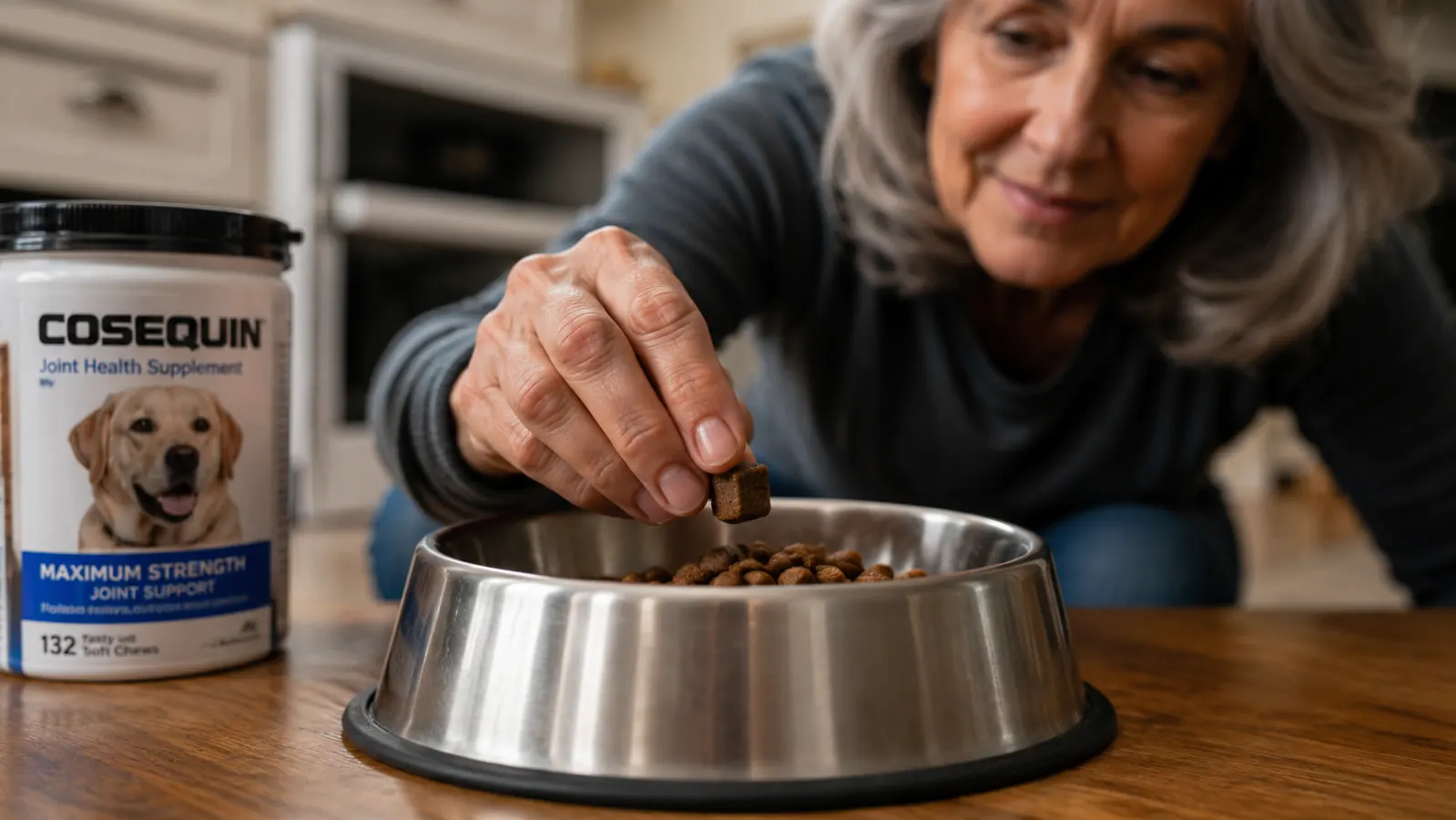
Bargain glucosamine chews without third-party certification. If a bag of 300 chews costs six dollars, the dose consistency and ingredient sourcing are likely to be poor. I have tried two store-brand versions on Hazel with no noticeable effect after two months of consistent dosing. When I switched to Cosequin, the improvement at the six-week mark was clear enough that I stopped rotating. The price difference per day is small enough that it is not a real tradeoff. I would also skip products that combine glucosamine with a long list of unrelated ingredients. A focused formula with glucosamine, chondroitin, and possibly MSM is what the research supports. More ingredients does not mean more benefit. For the full breakdown on what separates Cosequin from cheaper alternatives, the honest Cosequin review covers that in detail, and the 90-day Cosequin review tracks what the results actually looked like week by week.
Glucosamine works best as a long-game supplement. The dogs who benefit most are the ones whose owners stay consistent through the first six weeks before they see a clear result.
If your senior dog is past seven and showing any of the signs above, the window to slow the damage is now, not after the limp gets worse.
Cosequin by Nutramax is what I use for Hazel and what I recommend to any pet parent asking about joint support. It is the most trusted name in veterinary glucosamine, with real quality controls and a 4.7-star rating across more than 78,000 reviews.
Amazon Check Today's Price on Amazon →