
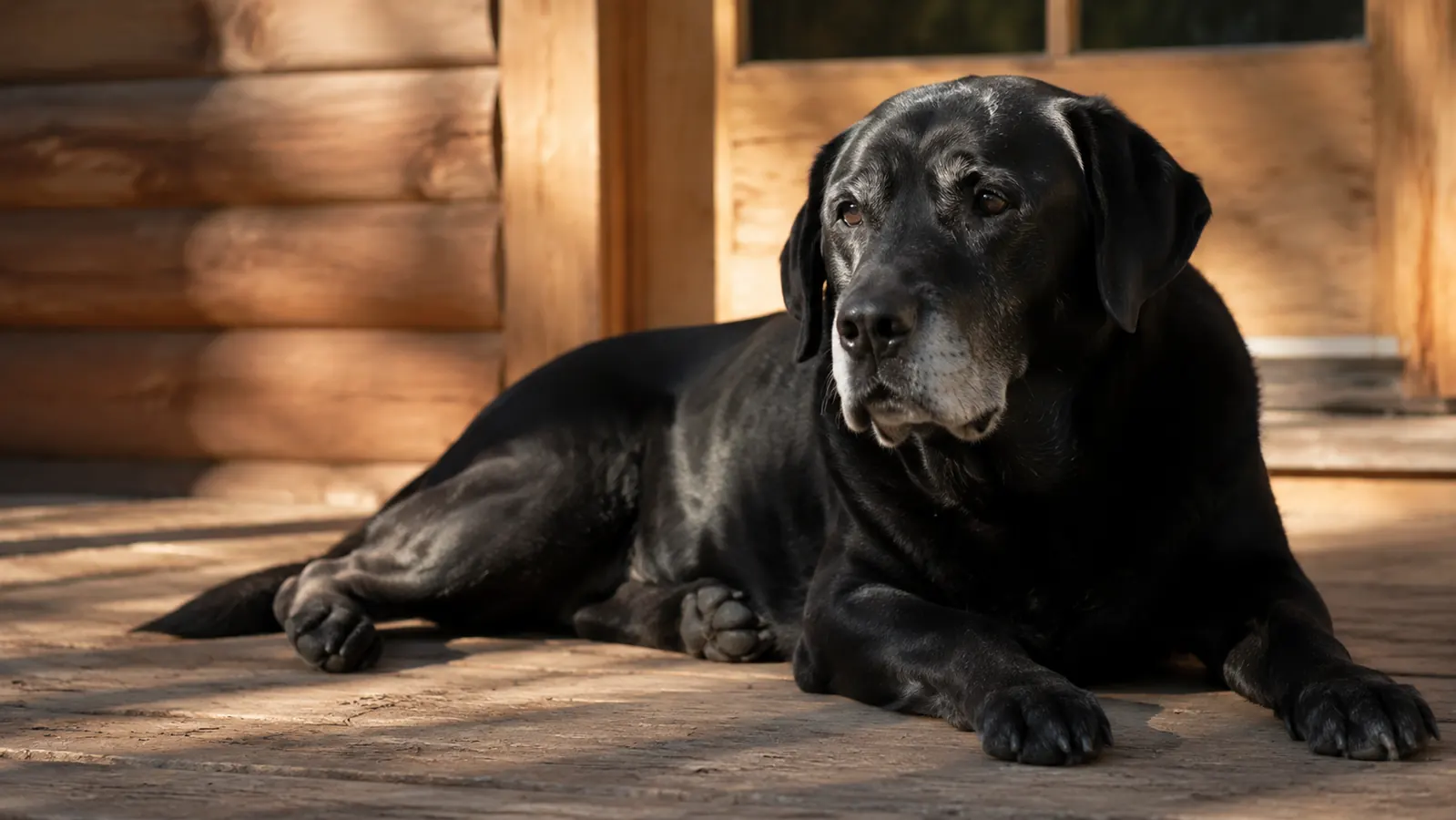
My neighbor called me last spring, annoyed. She had been giving her 9-year-old Golden Retriever Cosequin for six weeks and she had not seen a single change. 'Everyone told me this stuff was incredible,' she said. 'Did I buy the wrong one?' She did not buy the wrong one. She had the right product. But she had been set up with the wrong expectations, and that gap between expectation and reality is exactly what this review is here to close.
Cosequin by Nutramax is the most reviewed joint supplement on Amazon for dogs, sitting at 4.7 stars across nearly 80,000 ratings. It is veterinarian-recommended, NASC-quality-seal certified, and genuinely popular for a reason. But the glowing reviews consistently skip three things: the honest timeline, the cases where it does not work, and the ingredient ceiling that no glucosamine supplement, regardless of brand, can break through. If you are spending money on this for your dog, you deserve to know all of that before the first tablet hits the bowl.
The Quick Verdict
Cosequin is the most reliable glucosamine-chondroitin supplement available for dogs without a prescription. It works on the right dog, at the right stage of joint decline, with the right expectations. But it is not a painkiller, it will not reverse structural damage, and results before week 6 are unusual.
Amazon Check Today's Price →Your dog's joints start declining before you see the limp. Cosequin addresses the biochemistry of cartilage loss daily.
Nutramax Cosequin Maximum Strength DS Plus MSM ships Prime and is the same formulation used in clinical studies. Current pricing listed on Amazon.
Amazon Check Today's Price on Amazon →What Is Actually In the Bottle
The standard Cosequin DS (double-strength) chewable tablet contains 500 mg of glucosamine hydrochloride, 400 mg of sodium chondroitin sulfate, and 50 mg of manganese ascorbate. The DS Plus MSM version adds 250 mg of methylsulfonylmethane. Those are the active ingredients. The filler is a beef-flavored chewable base most dogs accept without complaint.
Glucosamine is an amino sugar that the body uses as a building block for cartilage. The working theory is that oral supplementation raises synovial fluid glucosamine concentrations, which may slow the rate of cartilage breakdown and encourage repair of existing damage. Chondroitin sulfate is a structural component of cartilage that is thought to inhibit enzymes that degrade joint tissue. MSM is an organic sulfur compound added mainly for its potential anti-inflammatory effect. None of these are patented miracle molecules. They are naturally occurring compounds that Nutramax sources, standardizes, and quality-tests better than most of its competitors, which is why Cosequin has the reputation it does.
One thing reviewers rarely mention: the glucosamine in Cosequin is the hydrochloride salt form, not glucosamine sulfate. Some older European studies were done with the sulfate form. The clinical evidence in veterinary medicine is largely agnostic on which form is superior, and Nutramax's own peer-reviewed research used their formulations directly. It matters to know because you may read articles online debating glucosamine HCl vs. sulfate as if it renders one product useless. In practice, the Cosequin DS formula has the most published veterinary research behind it of any over-the-counter joint supplement in the US market.
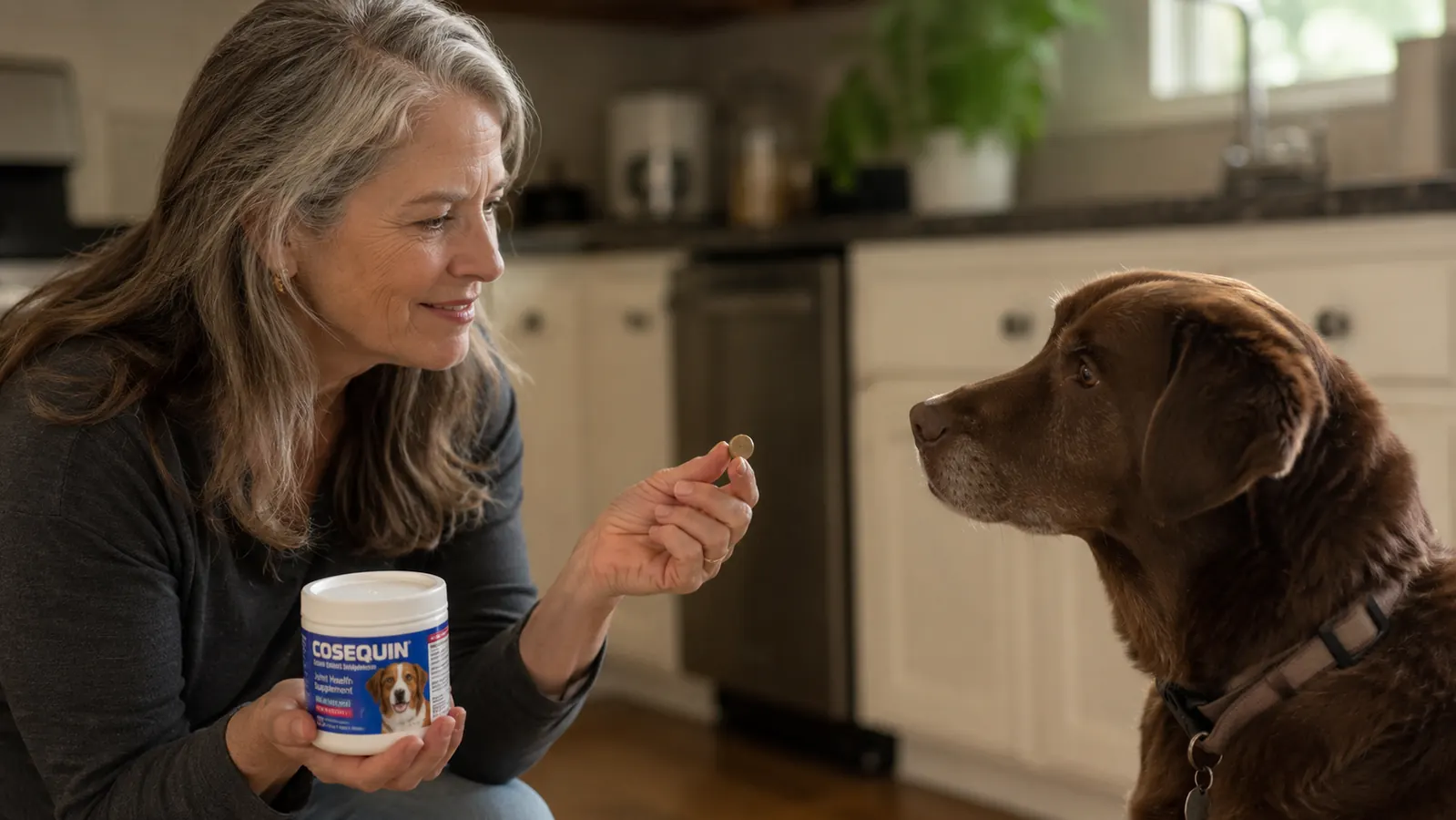
The Timeline Question Nobody Answers Honestly
Glucosamine is not ibuprofen. Expecting visible results in two weeks is like planting a tree and checking the next morning for shade.
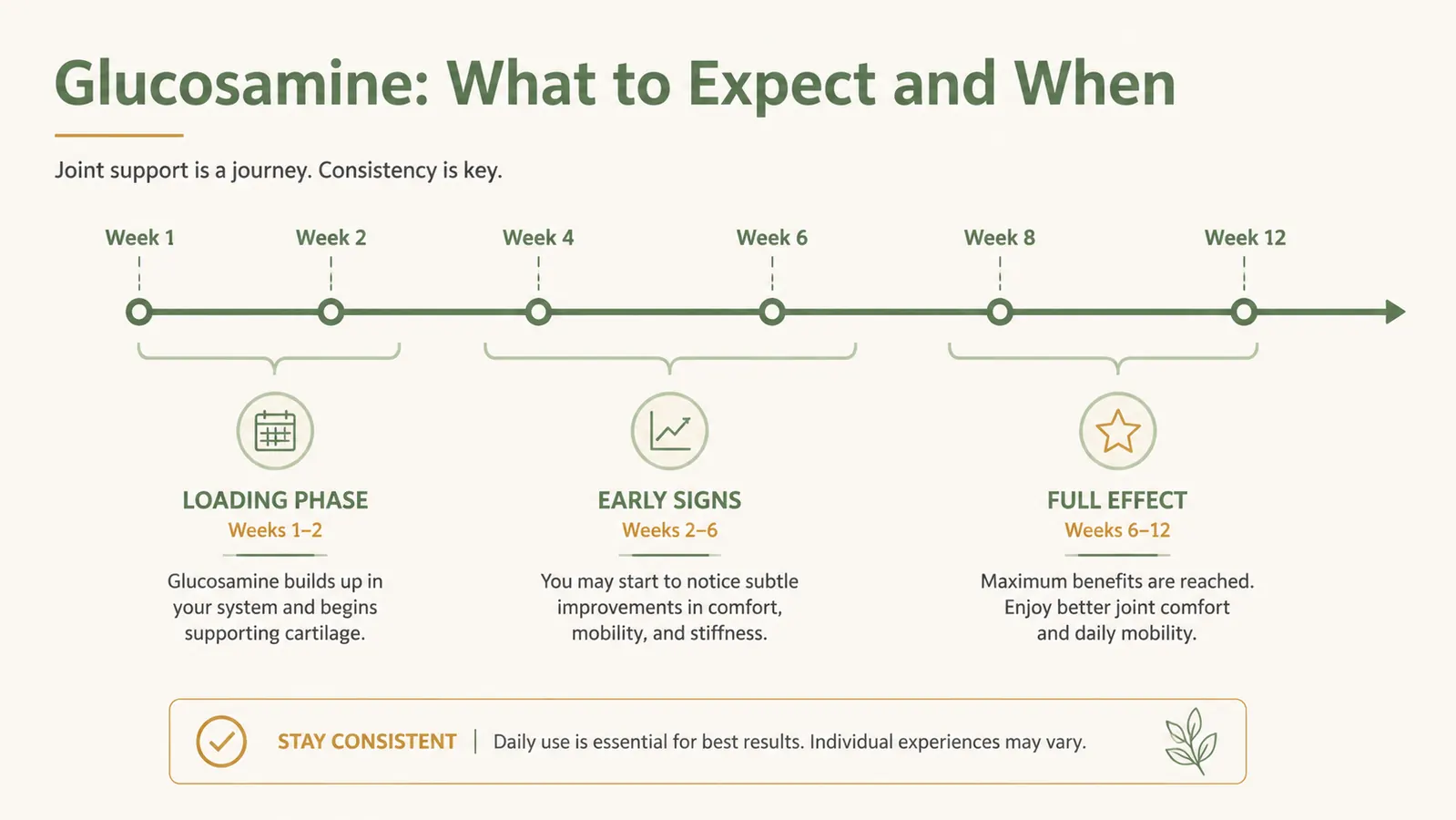
The single most common reason people abandon Cosequin and leave a 1-star review is that they expected faster results. The Nutramax dosing guidelines recommend a loading dose for the first 4 to 6 weeks, followed by a maintenance dose. That loading phase exists because glucosamine works systemically: it has to reach sufficient tissue concentration before any biological effect on cartilage metabolism is measurable.
In the dogs that respond to Cosequin, the typical owner observation window is 4 to 8 weeks for early signals, such as willingness to climb stairs with less hesitation or less stiffness after a rest, and 10 to 12 weeks for what most people describe as a clear behavioral change. Some dogs respond faster. A few take longer. If you are not seeing anything at week 12, at the correct maintenance dose for your dog's weight, that is meaningful data, and you should discuss it with your vet. But quitting at week 3 tells you nothing except that you stopped too soon.
My neighbor's six-week mark was actually right at the edge of where results start to emerge. I told her to give it four more weeks before drawing any conclusions. She called me at week ten. Her Golden was going up the back stairs on her own again for the first time in months.
What Cosequin Cannot Do (And What No Supplement Can)
This is the section that separates an honest review from a product advertisement. Glucosamine-chondroitin supplementation operates in the category of cartilage support and joint health maintenance. It is not a pain medication. It does not replace NSAIDs like Carprofen or Meloxicam when your dog is in acute pain. It does not rebuild cartilage that is completely eroded. And it does not treat inflammatory flare-ups the way a prescription anti-inflammatory can.
If your dog has been diagnosed with severe hip dysplasia with secondary osteoarthritis, Cosequin is likely to be part of a multi-modal treatment plan, not the whole plan. Your vet may also recommend fish oil for omega-3 anti-inflammatory support, weight management to reduce joint load, and periodic NSAID courses for acute flare-ups. Expecting Cosequin alone to manage a dog in significant pain is setting the supplement up to fail.
There is also a structural damage ceiling. Glucosamine can slow the degradation of existing cartilage and may support some repair of minor cartilage damage. It cannot regenerate cartilage that is gone. An X-ray showing bone-on-bone contact in the hip joint is not a picture that any over-the-counter supplement will meaningfully change. That is not a knock on Cosequin. That is the biology of cartilage, and no product on the market defies it.
Manufacturing Quality and Third-Party Testing
The reason Cosequin is recommended by so many veterinarians over generic glucosamine products from the vitamin aisle comes down to manufacturing standards and documentation. Nutramax holds NASC (National Animal Supplement Council) quality seal certification, which requires adverse event reporting, facility audits, and product testing. More importantly, they have funded and published peer-reviewed research on their specific formulations in respected veterinary journals.
Generic glucosamine tablets at half the price often contain the stated dose on the label, but the particle size, bioavailability, and batch consistency are not held to the same standard. You may be getting what the label says, but whether it reaches your dog's joint tissue in a useful form is a different question. When I have a dog owner ask me why I would pay more for Cosequin over a store brand, that is the short answer: published research on this specific formula and a certifiable manufacturing standard.
That said, Cosequin is not the only reputable option. Dasuquin, also by Nutramax, adds ASU (avocado/soybean unsaponifiables) to the glucosamine-chondroitin base. The published data on ASU is promising for additional cartilage support beyond what glucosamine alone provides. Dasuquin costs more. Whether that extra cost is justified depends on where your dog is in the progression of joint disease. For early maintenance and prevention, standard Cosequin DS is a defensible choice. For a dog with confirmed moderate-to-severe osteoarthritis, Dasuquin is worth the conversation with your vet. I wrote a full side-by-side comparison at the link below.

Palatability and Dosing Practicalities
The chewable tablets are beef-flavored and most dogs accept them without drama. I have seen dogs eat them like treats directly from an open palm. There is a small subset of dogs, particularly those with sensitive stomachs or food reactivity, who find the beef flavoring off-putting or who show mild GI upset in the first week of the loading dose. Giving the tablet with food or at the end of a meal resolves this in most cases.
Cosequin also comes in a sprinkle capsule form and a powder for dogs who resist chewing. If your dog is a label reader who pops the chewable out of the food bowl and leaves it on the floor, the sprinkle capsule emptied over wet food is a practical workaround. Dose by weight: small dogs (under 25 lbs) get one tablet daily during loading, medium dogs (25 to 75 lbs) get two, and large dogs (over 75 lbs) get three. After the loading phase, you typically drop to a maintenance dose of one tablet per weight tier. The product label spells this out; do not guess.
What I Liked
- Most published peer-reviewed veterinary research of any OTC joint supplement
- NASC quality seal with documented manufacturing standards and batch testing
- High palatability: the majority of dogs accept the chewable without any training tricks
- Available in multiple forms (chewable, sprinkle, soft chew) to match your dog's preferences
- Trusted by veterinarians specifically because of the research record, not just brand recognition
- MSM-added version provides additional anti-inflammatory support at modest extra cost
Where It Falls Short
- Results require patience: 4 to 8 weeks minimum before early signs appear
- Not a pain reliever, cannot substitute for NSAIDs in a dog experiencing acute discomfort
- Does not reverse advanced structural joint damage or bone-on-bone arthritis
- Some dogs show mild GI upset during the loading phase, especially on an empty stomach
- Ongoing daily cost adds up over months and years, particularly for large breeds at higher doses
Who Cosequin Helps Most
Based on everything I have read in the research and observed across dozens of conversations with other dog owners, Cosequin performs best on dogs in a specific window: early-to-moderate joint decline, where there is still functional cartilage to support and maintain. A dog showing the first signs of stiffness, slowing on stairs, or occasional reluctance to jump is the ideal candidate. Starting glucosamine at this stage, before the cartilage damage progresses significantly, is when the supplement has the most to offer.
It also performs well as a long-term preventive in breeds with known joint predisposition. Large and giant breeds, Labrador Retrievers, Golden Retrievers, German Shepherds, Rottweilers, and similar dogs carry elevated lifetime risk for hip and elbow dysplasia. Many owners in these breeds start Cosequin around age 5 or 6, before any symptoms appear. The logic is sound: if the supplement slows cartilage loss, starting it before you can see the loss gives you the most runway. There is no evidence it harms healthy joints.

Who Should Skip It or Needs More
Skip Cosequin, or at least do not rely on it alone, if your dog is in obvious pain right now. Pain is an acute problem. Glucosamine supplementation is a long-horizon investment. A limping, whimpering dog needs a vet visit and likely a short course of anti-inflammatory medication first. Once the acute pain is managed and your vet has assessed the degree of joint disease, adding Cosequin to the maintenance plan is reasonable.
Dogs diagnosed with severe osteoarthritis showing significant radiographic changes are unlikely to experience a meaningful quality-of-life shift from Cosequin alone. In those cases, a conversation about Dasuquin, a prescription-strength joint supplement, or adjunctive therapies like laser therapy or acupuncture is more appropriate. Cosequin is not a failure in these cases. The disease simply requires more intervention than an over-the-counter supplement can provide.
Finally, if your dog has any clotting disorders or is on blood-thinning medications, let your vet know before starting any chondroitin product. Chondroitin is structurally similar to heparin and may theoretically affect clotting at high doses. At typical Cosequin maintenance doses this is rarely a clinical concern, but it is worth disclosing.
What the 1-Star Reviews Are Actually Telling You
I read through about 200 of the negative reviews on the current Amazon listing to understand the pattern. The themes are consistent. The largest group stopped too soon, usually at two to four weeks, and saw no change. The second-largest group had dogs with severe joint disease where Cosequin was being asked to do more than it can. A third group reported GI upset, almost always in the first week and almost always resolvable by giving with food. A smaller group simply had dogs who refused the chewable, which the sprinkle form would have solved.
None of those negative experiences indicate a bad product. They indicate mismatched expectations or a solvable administration problem. That is not nothing. If you buy Cosequin without understanding the timeline and the scope of what it can address, you will likely end up in one of those categories. This review exists so that you do not.
The dogs that benefit most from Cosequin start it before the stiffness becomes a daily reality.
Nutramax Cosequin DS Plus MSM is the formula with the most veterinary research behind it. If your dog is in the early-to-moderate window of joint decline, this is the logical place to start.
Amazon Check Today's Price on Amazon →