
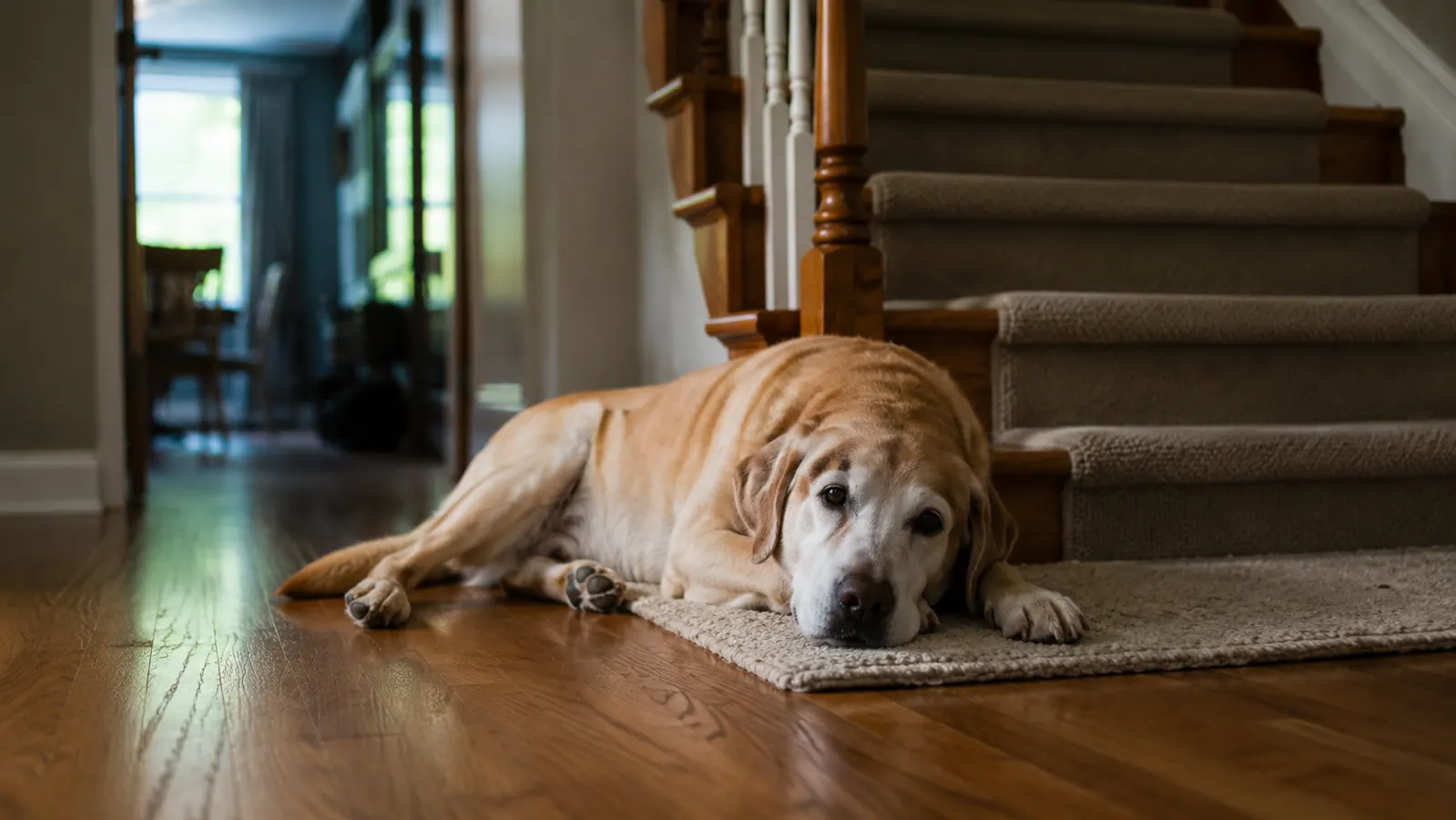
Biscuit is a 10-year-old yellow Lab, 74 pounds, and until about eight months ago she had never once refused to follow me up the stairs at night. That was always our thing. I would say "bed time" and she would beat me to the second-floor landing. Then one Tuesday in October she just sat at the bottom step and looked at me. I called her again. She tucked her chin and looked at the floor.
I took her to the vet that week. He watched her walk, palpated her hips, took X-rays. His conclusion was exactly what I had been afraid of: mild to moderate hip dysplasia, well-advanced for a dog her age, with some narrowing in the right hip socket. His recommendation was to keep her comfortable, watch her weight, and "not expect the same dog you had at five." He mentioned prescription NSAIDs if the pain seemed to worsen. He did not mention glucosamine. When I brought it up, he gave a polite half-shrug and said the evidence was "mixed."
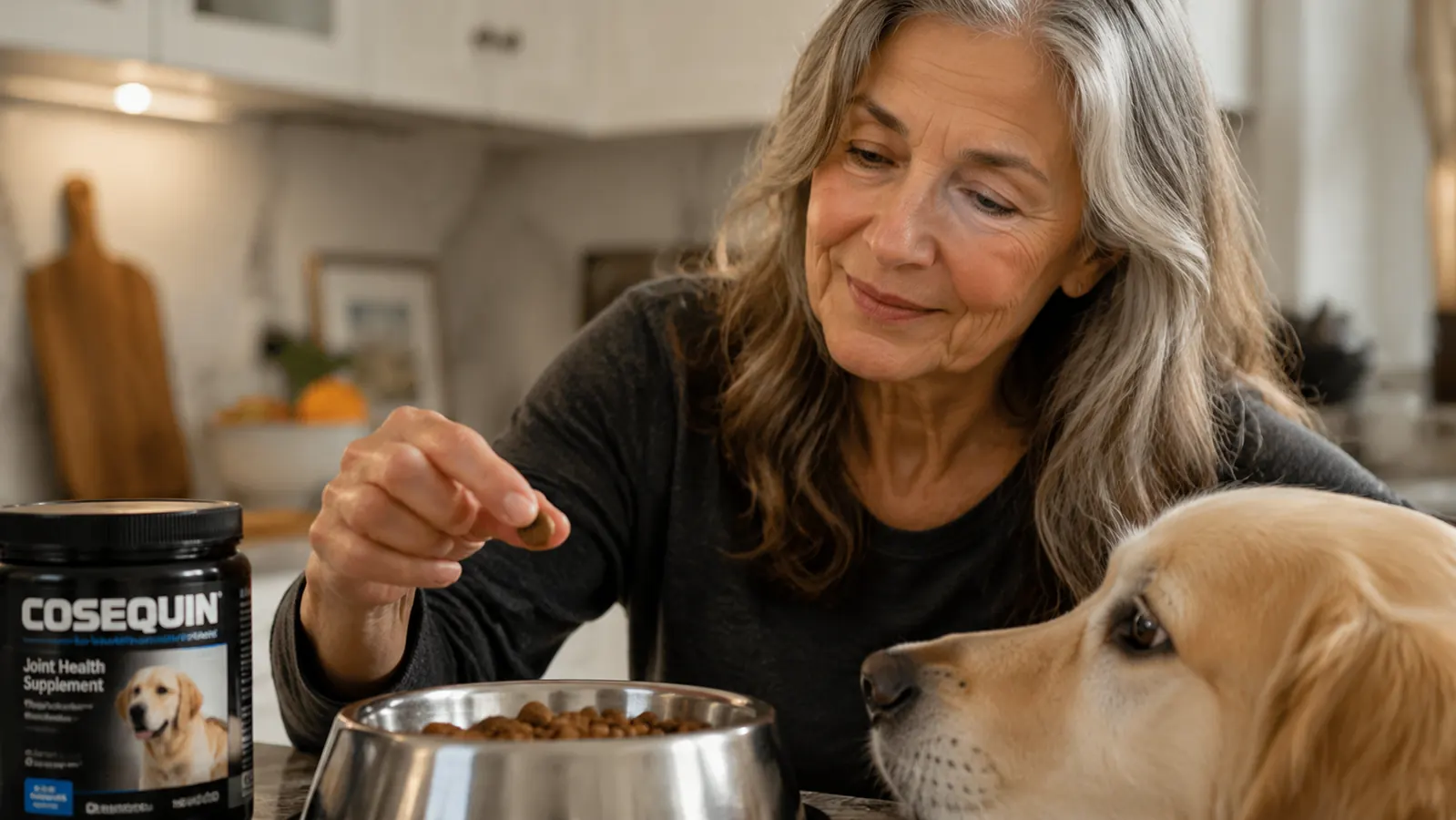
I drove home with a dog who could not do stairs and an answer that did not feel like enough. My neighbor Peg, who has kept Labs for thirty years and volunteers with a senior dog rescue on weekends, was pulling weeds in her front yard when I got back. I told her what the vet said. She asked if I had tried Cosequin. I told her the vet had shrugged at it. She laughed a little. "He shrugged at mine too," she said. "Try it for eight weeks and then tell me what you think."
Peg had been giving Cosequin, made by Nutramax, to her 12-year-old Lab for over a year. She described watching him go from barely walking to short neighborhood loops again. I knew Nutramax by reputation, having worked in a pharmacy for nearly two decades before retiring. They manufacture the veterinary standard for joint supplements. The formulation uses glucosamine hydrochloride and sodium chondroitin sulfate in dosages that mirror what controlled studies have actually tested. I ordered a bottle that evening.
Week six was when I noticed it. I said 'bed time' without thinking, the way you do after years of habit, and Biscuit was already at the third step before I had even moved.
I gave Biscuit the loading dose, two chews a day, for the first four weeks. She ate them off my palm like they were a treat, which made things easier. The chews smell faintly of chicken and have a soft texture that dissolves quickly. Week one and two I noticed nothing, which I had expected. Week three she seemed slightly less hesitant on the back deck steps, but I told myself not to read into it. Week four she walked the full loop around the block without stopping to shift her weight, something she had not done in months.
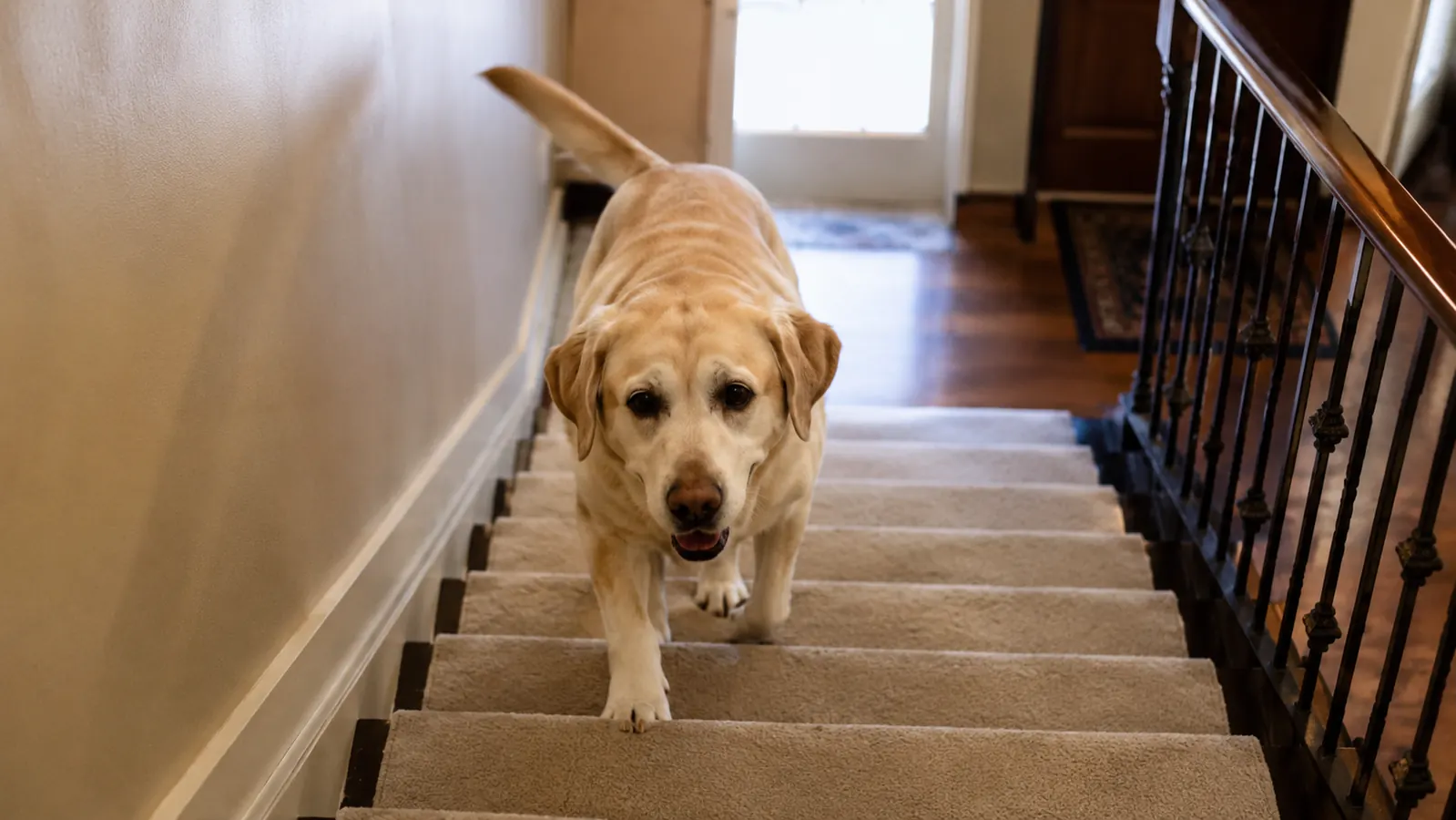
Week six was when I noticed it. I said "bed time" without thinking, the way you do after years of habit, and Biscuit was already at the third step before I had even moved. I stood there for a second. Then I followed her up. She was already lying on her mat by the time I reached the landing.
If your senior dog is slowing down on stairs or first thing in the morning, this is the supplement I would try first.
Cosequin by Nutramax has over 78,000 reviews on Amazon and is the most-recommended joint supplement among veterinary rehabilitation specialists. It is available without a prescription. Biscuit has been on it for six months and I have not looked back.
Amazon Check Today's Price on Amazon →I am not going to tell you Cosequin reversed her dysplasia. The X-rays still look the same. What changed is how she moves through her day. She gets up from her bed in the morning without the long pause and the careful rearrangement of her back legs. She walks the block without favoring her right hip. She chooses the stairs herself now, most nights, when she feels like it. The change is functional and real, even if it is not a cure.
I have recommended Cosequin to three friends since then. Two of them have older large-breed dogs, one has a medium-size mixed breed showing early stiffness at seven. All three started the loading dose and all three have come back to me with some version of "I think this is actually helping." One of them told me her vet shrugged too. I told her what Peg told me: try it for eight weeks and report back.
What I Would Tell You If We Were Sitting at My Kitchen Table

Here is what I know after six months: Cosequin is not a miracle and it is not instant. The loading phase takes time for the glucosamine and chondroitin to build up in the cartilage tissue. If you try it for two weeks and see nothing, that is not a failure, that is just Tuesday. Give it eight full weeks before you decide. Stay consistent with the dosing. If your dog is over 40 pounds, make sure you are using the large dog formulation with the right serving size for their weight.
I also want to be honest about what it does not do. It does not fix torn cartilage. It does not replace a veterinary workup for a dog in serious pain. If your dog is non-weight-bearing, limping badly, or in obvious distress, that conversation starts with your vet, not with a supplement. But if your dog is doing what Biscuit was doing, slowing down gradually, avoiding steps that used to be easy, taking a little longer to get moving in the morning, that is exactly the window where this supplement has the most to offer.
The thing that sticks with me is how ordinary the fix was. No prescription, no side effects, no complicated protocol. Just a soft chew that smells like chicken, given twice a day with breakfast and dinner, for a dog who deserved better than "don't expect the same dog you had at five." Biscuit is not the same dog she was at five. But she is sleeping on the second floor again, and some nights she still beats me to the landing.
Cosequin is what I give Biscuit. It is what I would reach for first if I were starting over with a stiff senior dog.
Nutramax Cosequin for dogs is available on Amazon. No vet visit required, no subscription needed. If you want to read a more detailed breakdown before buying, our 90-day test is linked below.
Amazon Check Today's Price on Amazon →