

My dog Hazel, a 10-year-old Golden mix, started refusing the back stairs about 18 months ago. Not dramatically. She would just stand at the bottom and look up at me, then look away. Our vet confirmed mild hip dysplasia and moderate osteoarthritis. She was not in crisis, but the stiffness was real, and it was getting worse each winter. The vet mentioned glucosamine. I nodded, went home, searched Amazon for 45 minutes, and bought the wrong one twice before figuring out what actually mattered. This guide is the process I wish someone had handed me that afternoon.
Glucosamine is not a cure. It does not rebuild destroyed cartilage. What it does, when given correctly and consistently, is slow the breakdown, reduce inflammation at the joint lining, and give many dogs measurably better mobility over 6 to 12 weeks. The key words are correctly and consistently. Most dogs who fail to respond were underdosed, given a product with poor bioavailability, or evaluated too soon. This guide fixes all three problems.
Your dog's joints are already losing cartilage every day. The best time to start a glucosamine protocol was six months ago. The second best time is today.
Nutramax Cosequin is the most studied glucosamine-chondroitin formula for dogs, with over 78,000 verified reviews and consistent third-party quality testing. It is where most vets and rehab specialists start.
Amazon Check Today's Price on Amazon →Step 1: Confirm the Problem Is Joint-Related, Not Something Else
Before spending a dollar on supplements, rule out the mimics. Lyme disease, cruciate ligament tears, bone cancer, and spinal disc problems can all look like arthritis from the outside. A stiff morning gait that loosens up after 10 minutes of walking is classic arthritis. Sudden-onset three-legged limping that does not improve is something else. If your dog has not had a recent physical exam, get one first. Your vet can assess joint range of motion, feel for crepitus, and order X-rays if the presentation is ambiguous. Glucosamine will not hurt a dog with a torn CCL, but it also will not help, and you will spend months confused about why nothing is changing.
Arthritis is most common in large and giant breeds, dogs over seven years old, dogs who were very athletic in their youth, and dogs who had any prior joint injury or surgery. If Hazel checks several of these boxes, glucosamine is a reasonable first step with or without a formal diagnosis, because the risk profile of glucosamine is genuinely low. But do not skip the vet visit entirely. A baseline exam also gives you objective data to compare against at the 60-day mark.
One specific thing to ask your vet: does my dog have any kidney concerns? Glucosamine is metabolized renally, and while the research on this is not alarming, dogs with moderate to severe kidney disease deserve a conversation before adding any long-term supplement. For most healthy older dogs, this is a non-issue.

Step 2: Choose a Glucosamine Product with the Right Ingredient Stack
Not all glucosamine supplements are equal. The ingredient that matters most is glucosamine hydrochloride (HCl), not glucosamine sulfate. HCl has higher bioavailability and is the form used in most of the peer-reviewed veterinary research. You want a dose of at least 500 mg per serving for a medium dog (30 to 60 lbs), scaling up to 1000 mg or more for large breeds over 60 lbs.
The second ingredient to look for is chondroitin sulfate. Glucosamine and chondroitin work synergistically. Glucosamine provides the building blocks for cartilage; chondroitin inhibits the enzymes that degrade it. Products that include both typically show better outcomes than glucosamine alone. A third ingredient, MSM (methylsulfonylmethane), adds anti-inflammatory benefit and is worth having if your dog has significant soft-tissue stiffness alongside the joint issue. Nutramax Cosequin DS includes glucosamine HCl plus chondroitin without MSM; the Cosequin DS Plus MSM version adds the third ingredient for dogs with more advanced inflammation.
What to avoid: proprietary blends that do not disclose individual ingredient amounts, products with only glucosamine sulfate and no chondroitin, and anything with artificial xylitol sweeteners (toxic to dogs). Chewable tablets are generally preferred over capsules because compliance is better when the dog actually eats the supplement.
Step 3: Calibrate the Dose for Your Dog's Weight and Age
Glucosamine dosing follows a loading-then-maintenance structure. For the first 4 to 6 weeks, you give a higher loading dose to saturate joint tissue. After that, you drop to a lower maintenance dose. This is not a unique protocol for dogs. The same loading model is used in human clinical trials and in the veterinary studies that established efficacy. Most pet owners skip the loading phase because the packaging is sometimes unclear about it. Do not skip it.
A practical weight-based guide: dogs under 25 lbs typically get one standard chew per day (about 500 mg glucosamine); dogs 25 to 50 lbs get two chews during loading and one during maintenance; dogs 50 to 100 lbs get three to four chews during loading and two during maintenance; dogs over 100 lbs should consult the packaging and your vet, as some formulations have size-specific products. Hazel is 65 lbs. I gave her three Cosequin chews daily for the first six weeks, then dropped to two. That is within the standard clinical range and also what the Cosequin label recommends for a large dog.
Give the supplement with food. Some dogs get a mild stomach upset from glucosamine on an empty stomach, especially during the higher loading phase. Mixing a chew into their kibble or giving it right after a meal eliminates this for most dogs.

Step 4: Track Mobility Weekly for the First 60 Days
The biggest mistake owners make is expecting results in week one and giving up in week three. Glucosamine does not work like a painkiller. It works like a building block. The cartilage-level changes take time to accumulate before they translate into visible behavior changes. Most dogs who respond well show meaningful improvement between weeks 6 and 10. Some dogs take 12 weeks. A few never respond, which likely reflects the degree of cartilage loss they started with.
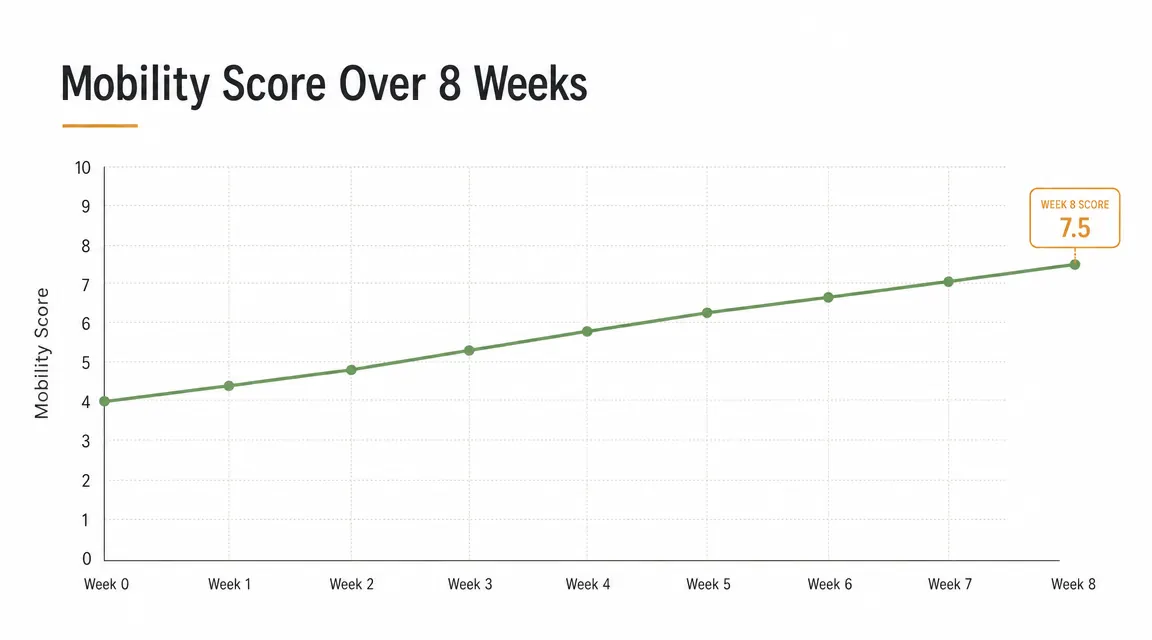
Keep a simple tracking log. You do not need a spreadsheet. A notes app on your phone works fine. Rate your dog on three behaviors each Sunday morning: stair confidence (1 to 5), morning stiffness duration in minutes, and willingness to jump onto furniture or into the car. Score each category 1 to 5. A composite score below 9 at baseline that climbs above 12 by week 8 is meaningful progress. If you see no change at all by week 10, the product may not be the issue. See Step 5.
The dogs who fail to respond to glucosamine are almost always underdosed or evaluated too early. Give it a full loading phase, dose by weight, and give it 60 days before drawing conclusions.
One objective marker that is easy to spot: morning warm-up time. Most arthritic dogs need 5 to 20 minutes of slow movement before their gait normalizes. By week 8 on an effective glucosamine protocol, that warm-up window should shorten noticeably. Hazel went from 12-minute morning stiffness to under 5 minutes by week 10. The back stairs returned at week 7. Neither happened suddenly. Each improvement was gradual enough that I almost missed it until I checked my log.
Step 5: Adjust if Results Stall or Are Incomplete
If week 10 arrives with no measurable change, run through this checklist before concluding that glucosamine does not work for your dog. First, were you consistent? Missing doses during the loading phase, especially multiple days in a row, resets the tissue saturation. Second, was the dose correct for your dog's actual weight? A 70-lb dog getting a dose calibrated for a 30-lb dog will show less response. Third, is there a secondary pain source that glucosamine cannot address? Spinal stenosis, a partial CCL tear, or a hairline fracture can coexist with arthritis and override the joint supplement benefit.
If the checklist clears and results are still flat, consider two adjustments. The first is switching to a glucosamine product that also includes MSM and omega-3 fatty acids. The combination of glucosamine, chondroitin, MSM, and omega-3s addresses more of the inflammatory pathway than glucosamine-chondroitin alone. The second option is adding a fish oil supplement separately. EPA and DHA from marine sources have strong independent evidence for reducing joint inflammation in dogs, and the combination with glucosamine is additive, not redundant.
If your dog shows clear signs of pain, like reluctance to be touched on the hindquarters, crying when rising, or guarding a limb, glucosamine alone is not sufficient. That warrants a return vet visit to discuss NSAIDs or prescription joint medications. Glucosamine is a maintenance and prevention tool. It is not a substitute for acute pain management.
What Else Helps Alongside Glucosamine
Glucosamine works best as part of a broader joint management routine. Weight control is the single highest-leverage variable. Every extra pound of body weight adds three to four pounds of force to the hips and knees during normal walking. A 10-lb weight reduction in an overweight 80-lb dog often produces more visible mobility improvement than any supplement. If your dog is carrying excess weight, address that in parallel with the glucosamine protocol.
Low-impact exercise matters too. Contrary to the instinct to rest an arthritic dog, light daily movement keeps the joint fluid circulating and the surrounding muscles strong. Short, flat walks at a pace the dog can maintain comfortably are better than long hikes or forced rest. Swimming is ideal if you have access to a safe body of water or a canine hydrotherapy facility. The buoyancy removes weight-bearing stress entirely while preserving range of motion and muscle tone.
Sleeping surface is also underappreciated. Dogs with joint pain who sleep on hard floors or thin foam are reloading their pressure points every night. An orthopedic memory foam bed with at least 3 inches of density-rated foam can reduce the overnight stiffness that makes morning warm-up so painful. If you have already started the glucosamine protocol and are not seeing results, check your dog's sleeping surface before changing the supplement.
For dogs who need more than supplements and lifestyle changes, there are several veterinary options worth knowing about. Adequan (polysulfated glycosaminoglycan) is an injectable form of joint support that works at a faster timeline than oral glucosamine and has stronger evidence for cartilage protection. Laser therapy and therapeutic ultrasound are available at many veterinary rehabilitation centers and show real benefit for chronic joint pain. These are not replacements for glucosamine. They are additions for dogs who need more support than a daily chew provides.
Ready to start? Cosequin DS is where most vets recommend beginning: proven glucosamine-chondroitin formula, no prescription needed, and a 90-count supply gives you the full loading phase plus several weeks of maintenance.
With 78,000+ reviews and years of veterinary endorsement, Nutramax Cosequin is the benchmark for dog glucosamine. Use the dosing guide above to determine how many chews per day your dog needs, and track your mobility scores from day one.
Amazon Check Today's Price on Amazon →