
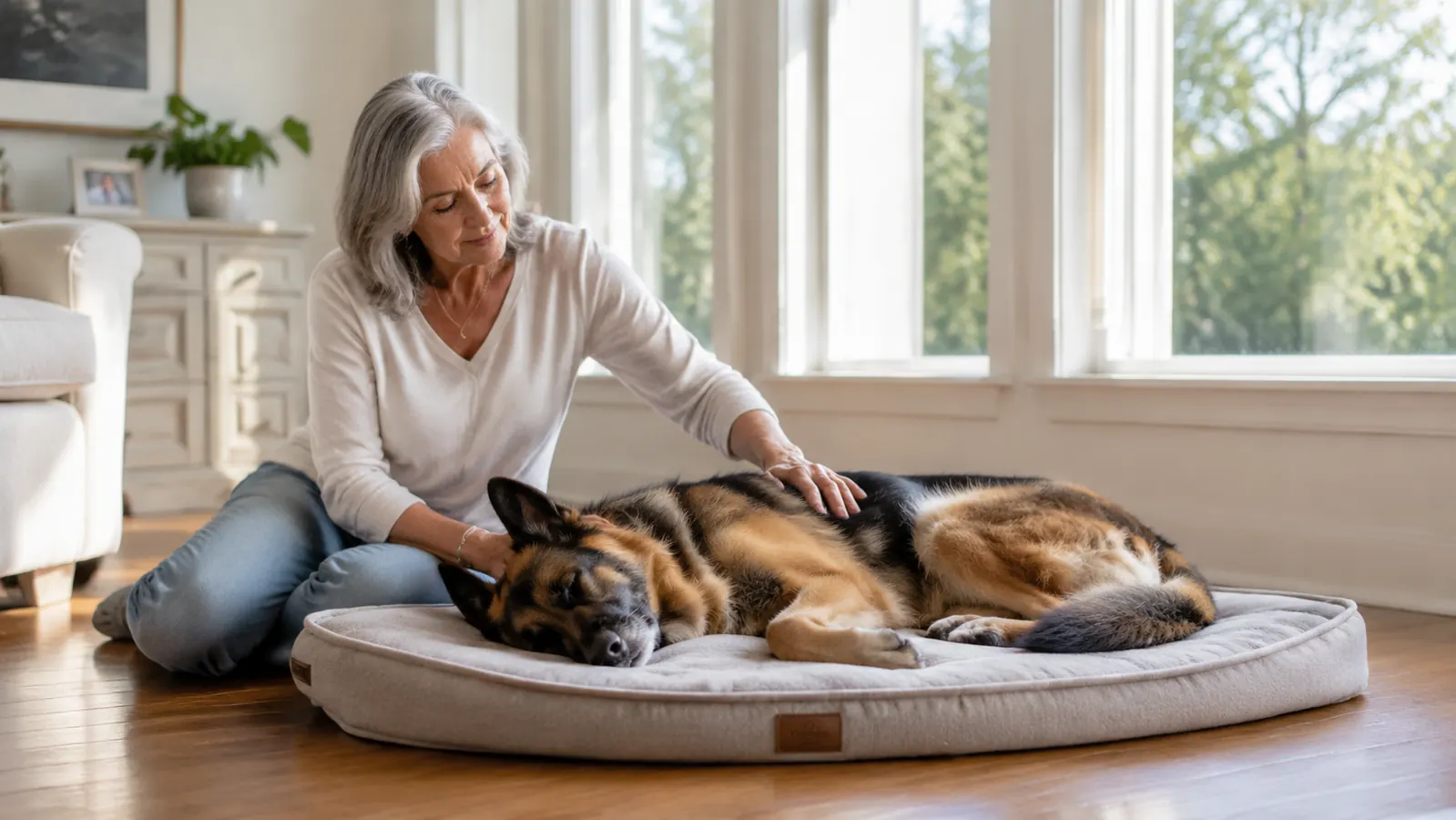
If your dog weighs more than 50 pounds and sleeps on a standard poly-fill bed, there is a reasonable chance that bed is doing nothing for their joints. The foam compresses under a large dog's body weight within weeks, leaving them essentially sleeping on the floor with a thin fabric layer between them and the hard surface. I have seen this play out with my own dogs, and I have heard the same story from dozens of other owners who bought a bed that looked plush on Amazon and turned into a flat mat by spring.
The good news is that picking the right orthopedic bed is not complicated once you know which four variables actually matter. This guide walks through each one, in the order you should evaluate it, so you can filter out the beds that will fail within a season and find one that actually earns its spot in your home. The EHEYCIGA Orthopedic Dog Bed for Extra Large Dogs is the specific product I recommend at the end of this checklist for dogs over 50 pounds, and I will explain exactly why it clears each of these bars.
Your large dog's joints are under pressure every night. This bed is built to handle it.
The EHEYCIGA orthopedic bed uses high-density memory foam, a sealed waterproof liner, and a machine-washable cover. Rated 4.5 stars across more than 20,000 reviews. Available in multiple sizes for dogs from 50 to over 100 pounds.
Amazon Check Today's Price on Amazon →Step 1: Start with Foam Density, Not Foam Thickness
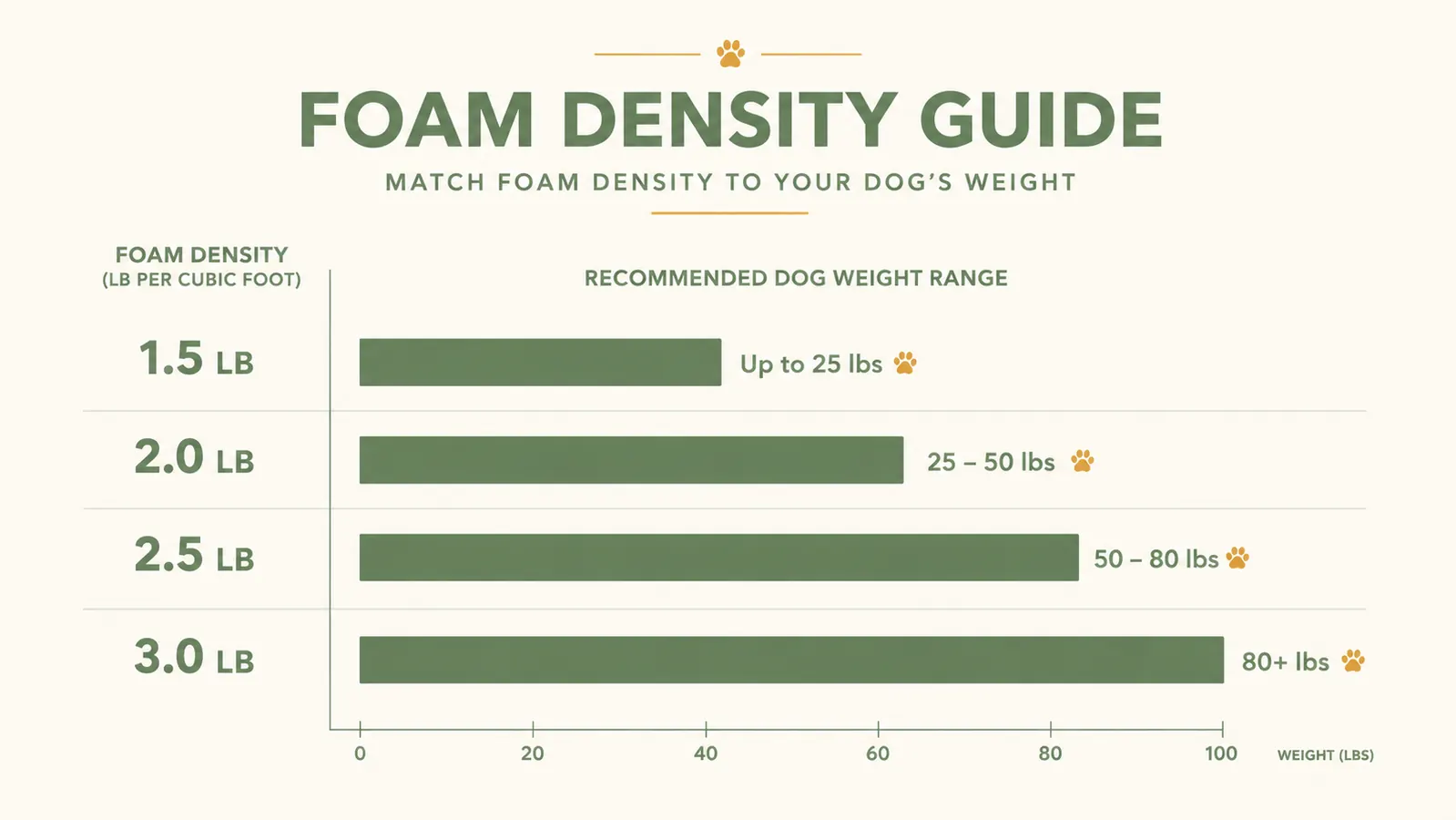
Most people look at photos and judge a bed by how thick the foam appears. That is the wrong starting point. A 4-inch layer of low-density foam collapses under a 90-pound dog the same way a standard cushion does. What matters is the density, usually measured in pounds per cubic foot, because density determines how well the foam resists compression over time.
For a dog over 50 pounds, you want memory foam with a density of at least 2.0 lb per cubic foot. Beds rated at 1.5 or below will soften and bottom out quickly. Beds in the 2.5 to 3.0 lb range hold their shape longest and offer genuine joint support rather than just a softer surface. The EHEYCIGA uses high-density memory foam engineered specifically for heavier dogs, which is one reason it still holds its shape after extended use under dogs in the 80 to 100 pound range.
Thickness matters too, but only once density clears the bar. A 4-inch high-density base is more supportive than a 7-inch low-density base. When a manufacturer lists thickness prominently but buries or omits the density rating, that is usually a signal the foam is not the strongest part of the product.
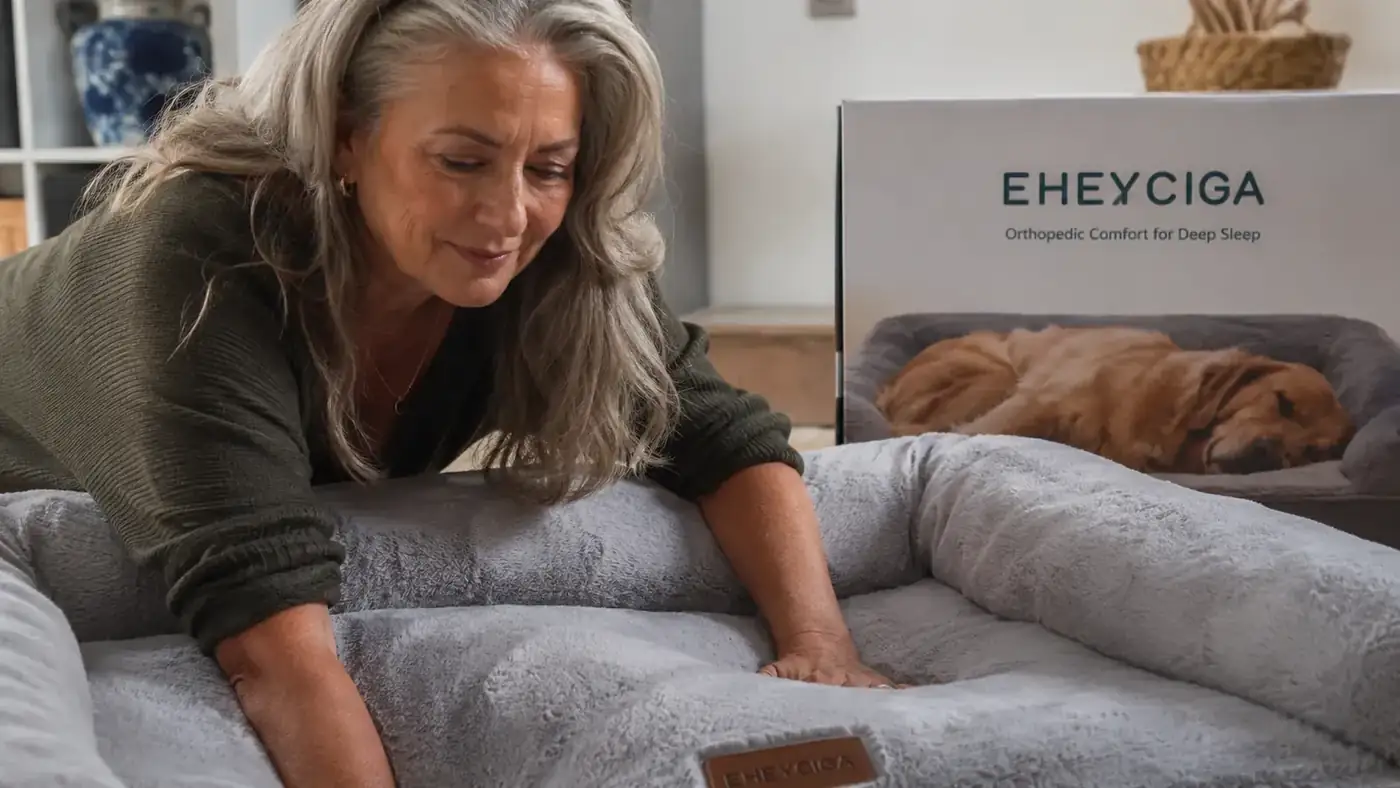
Step 2: Confirm There Is a Waterproof Liner Under the Cover
Large dogs, especially seniors, are more prone to incontinence accidents, drooling, and wet paws coming in from outside. A cover that you can throw in the wash is useful, but it does not protect the foam itself. Once moisture reaches the foam core, you are dealing with mold, odor, and accelerated breakdown that no amount of washing can fix.
Look for a bed that has a dedicated waterproof liner wrapped around the foam, separate from the outer cover. This liner acts as a moisture barrier that keeps the structural foam dry even when the cover gets soaked. The EHEYCIGA includes a waterproof inner liner that zips around the memory foam base. This is not a coating or a treated fabric, it is an actual physical barrier. That distinction matters for anyone with a dog who has had even one accident on a previous bed.
A good test to ask before buying: if you spilled a cup of water on this bed without the cover on, would the foam stay dry? If the manufacturer cannot confirm that with a waterproof liner, the answer is probably no.
Once moisture reaches the foam core, you are dealing with mold, odor, and accelerated breakdown that no amount of washing can fix. A waterproof liner is not optional for large dogs.
Step 3: Check That the Cover Is Actually Machine Washable, Not Just Spot Clean
Spot-clean-only covers are a practical problem with large dogs. A spot-clean designation usually means the fabric cannot handle the agitation of a washing machine without shrinking, pilling, or losing its shape. With a large dog who tracks in mud, sheds heavily, and may drool on the surface, a spot-clean cover will look and smell bad within a few weeks of regular use.
A fully machine-washable cover changes the ownership experience significantly. You can wash it weekly or whenever needed, which keeps the sleeping surface sanitary and extends the overall life of the bed. When reading reviews, filter for mentions of the cover holding up after repeated washing, not just after one or two cycles. The EHEYCIGA cover is removable via zipper and machine washable, and owner reviews consistently note that it holds its shape and texture through repeated washes without pilling or shrinking.
One additional detail worth checking: does the zipper run all the way around the base, or only partway? A partial zipper makes it much harder to pull the cover off a large bed without wrestling with it. A full perimeter zipper is a quality-of-life feature that matters every single wash cycle.
Step 4: Size Up One Category From What You Think You Need
The most common sizing mistake owners make is buying the labeled size that matches their dog's length while standing. Dogs do not sleep in a standing position. A 70-pound Labrador who stretches out fully while sleeping may easily occupy 40 to 44 inches of bed length. If you buy a bed labeled for dogs up to 70 pounds and it measures 36 by 27 inches, your dog's legs are hanging off the edge. That defeats the entire point of joint support.
The practical rule: measure your dog from nose to tail while fully stretched out on the floor, then add at least 8 inches in each direction. That is the minimum sleeping surface you should buy. For a dog between 70 and 90 pounds, this usually means an XL or XXL bed even if the weight rating on a standard large says it covers your dog's weight. Weight capacity and sleeping dimensions are two separate specifications. Both matter.
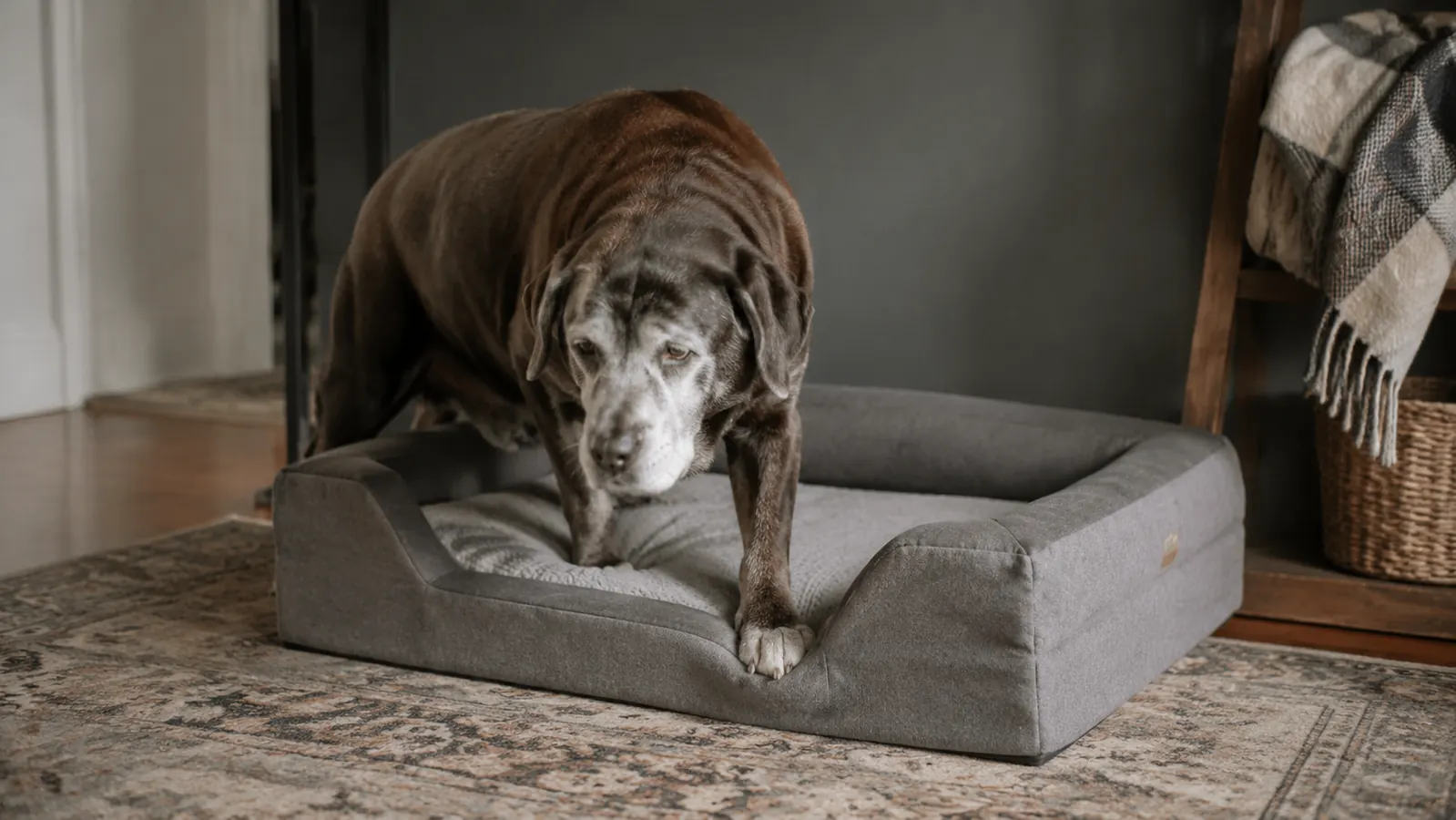
Also consider entry height for senior dogs or those with diagnosed joint issues. A thick memory foam bed raises the sleeping surface higher off the floor, which can be awkward for a dog with severe hip dysplasia or arthritis who has trouble stepping up. Low-profile designs that sit closer to the floor are often a better choice for dogs who are already showing mobility limitations. The EHEYCIGA keeps a low entry profile while still providing substantial foam depth, which is a deliberate design choice that shows up as a notable positive in reviews from owners of senior large breeds.
Step 5: Read the One and Two-Star Reviews Before Buying
Five-star reviews tell you what works when everything goes right. One and two-star reviews tell you what breaks down under real conditions. For orthopedic dog beds, the failure patterns you are looking for are: foam flattening within the first three months, zipper breaking on the first or second wash, waterproof liner cracking or delaminating, and cover fabric thinning at pressure points.
If a bed's critical reviews concentrate around those failure modes within the return window, that is a durable signal that the product has a design or manufacturing problem. The EHEYCIGA's critical reviews cluster around fit and sizing questions rather than structural failures. Reviewers who gave lower ratings typically note that the bed ran larger than expected in footprint or that their specific dog preferred a bolstered design. Those are legitimate observations, but they are not quality failures. That review pattern is actually a positive indicator compared to beds where critical reviews cite foam collapse or seam failures after a few months.
Sorting Amazon reviews by "Most Critical" and reading the first 10 takes less than five minutes and is the single best pre-purchase research step most people skip.
What Else Helps Beyond the Bed
The right orthopedic bed addresses mechanical pressure on joints during rest, which is significant, but it works best alongside a few other changes. For dogs already showing stiffness or slowing down on stairs, adding a joint supplement like glucosamine and chondroitin to their daily routine addresses the underlying cartilage and fluid loss that causes pain. The bed reduces the nightly compression load; the supplement addresses what is happening inside the joint itself. Neither fully replaces the other.
Bed placement also matters more than most owners realize. Placing the bed away from cold drafts and hard floors reduces the chill that makes stiff joints feel worse in the morning. If your dog currently sleeps on tile or hardwood, even a short move to a carpeted area can reduce how stiff they appear when they first stand up. The bed provides support; the environment affects how well that support translates to how your dog feels at 7 AM.
If you want to go deeper on the signs that indicate your dog needs a genuine orthopedic upgrade rather than just a softer cushion, the article on 10 signs your dog needs an orthopedic bed covers those behavioral and physical signals in detail. And if you are specifically evaluating the EHEYCIGA and want a full long-term use breakdown, the EHEYCIGA orthopedic dog bed review covers one year of use on a 95-pound German Shepherd.
Ready to stop watching your large dog sleep on a flattened cushion?
The EHEYCIGA orthopedic bed clears all five of the checkpoints in this guide. High-density memory foam, a sealed waterproof liner, a machine-washable cover, generous sizing for large and extra-large dogs, and a track record of holding up in critical reviews. Over 20,000 ratings and counting.
Amazon Check Today's Price on Amazon →